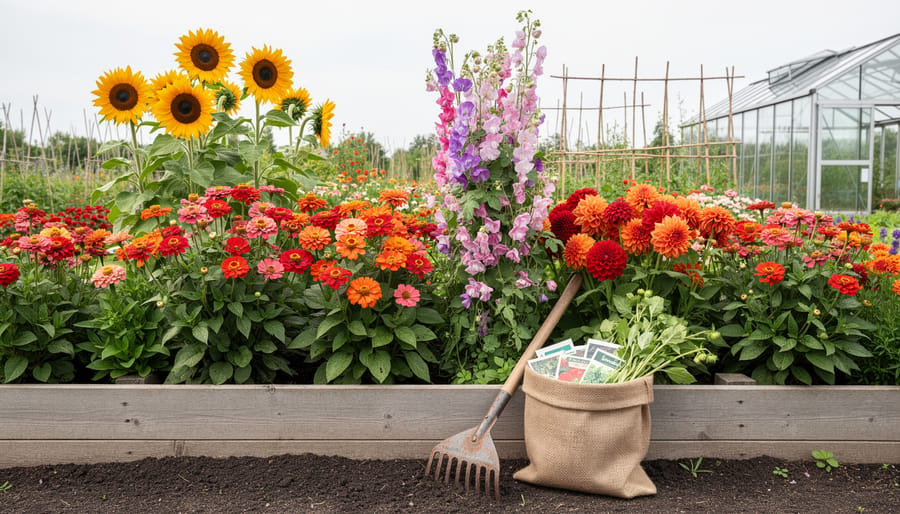
Growing cut flowers for your garden or small floral business requires just ten proven, budget-friendly plants that cost between $2 and $15 to start, deliver multiple flushes of blooms per season, and propagate easily to expand your stock without additional investment. These workhorses of the cutting garden, including zinnias, sunflowers, dahlias, and sweet peas, thrive in Canadian growing zones and offer the combination of low entry cost, high stem count, and market appeal that makes them profitable for aspiring florists and satisfying for home gardeners.
The economics of flower growing change dramatically when you choose varieties that multiply quickly, bloom prolifically, and require minimal specialized care. A single dahlia tuber purchased for $8 can yield 30 to 50 stems in its first season and divide into six tubers by fall, giving you exponential growth year over year. Similarly, a $3 packet of zinnia seeds produces hundreds of plants that bloom continuously from July through October with proper deadheading.
For Canadians exploring floristry as a career or side business, starting with the right plant selection means you can test market demand, develop design skills, and build client relationships without the overhead of wholesale flower purchases. You’ll gain hands-on knowledge of stem mechanics, seasonality, and variety performance that strengthens your expertise whether you eventually scale to a full production garden or launch a studio practice.
This guide profiles ten essential cutting garden plants selected specifically for their affordability, reliability in shorter growing seasons, and proven value in both home gardens and small floral operations. Each profile includes realistic cost breakdowns, propagation methods to stretch your budget, and practical insights on bloom timing and vase life that help you plan a garden that delivers continuous supply from spring through fall.
How We Selected These Budget-Friendly Garden Plants
Choosing plants for a cutting garden or floral business requires more than just liking how they look. We evaluated each plant against specific criteria that matter when you’re growing flowers for professional use, especially when starting on a tight budget. These selections reflect real-world considerations for Canadian growers who want maximum value from every seed packet or bulb investment.
Our selection criteria included:
- Initial cost of seeds, bulbs, or starter plants (prioritizing options under $5 per packet or affordable bulk pricing)
- Ease of propagation and potential for self-seeding or division to reduce future costs
- Bloom yield per plant throughout the growing season
- Suitability for Canadian growing zones (zones 2-7) and adaptability to shorter growing seasons
- Cutting quality, including stem length, vase life, and professional appearance
- Return on investment for floral business use, considering market demand and design versatility
We also factored in how these plants perform for beginners, since building confidence matters as much as building inventory when you’re just starting out. The plants on this list have proven themselves in Canadian gardens and commercial growing operations alike. Understanding these fundamentals helps you make smarter choices, whether you’re exploring florist salaries as a career option or already operating a small flower business.
1. Zinnias: High-Yield, Low-Cost Summer Bloomers
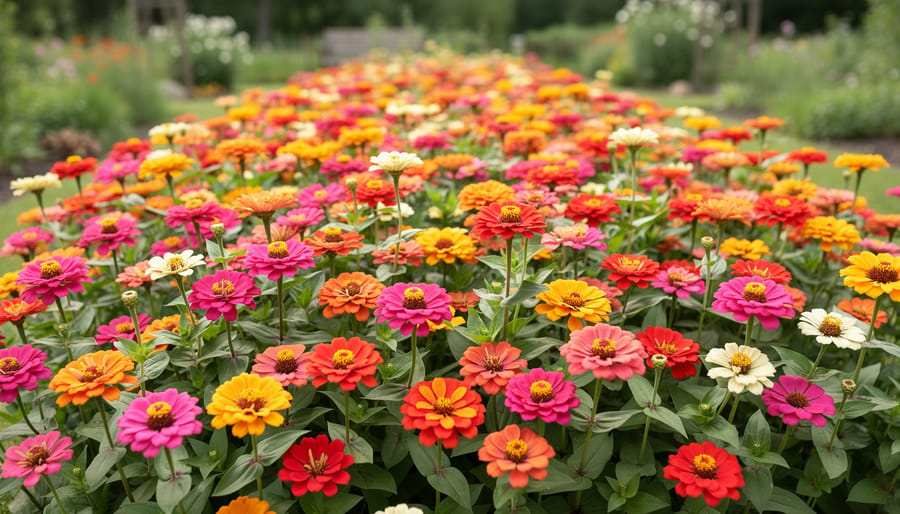
Zinnias earn their place at the top of any budget-friendly flower garden list. A single packet of seeds typically costs between $2 and $4 and can yield dozens of plants, making them one of the most economical choices for aspiring florists building a cutting garden. They germinate readily in warm soil, usually within five to seven days, and transplant easily if you prefer starting them indoors.
What makes zinnias particularly valuable for flower businesses is their prolific blooming habit. Once they start flowering in midsummer, they produce continuously until the first hard frost, often delivering 20 or more stems per plant when properly deadheaded. This cut-and-come-again nature means your initial investment keeps paying dividends throughout the growing season.
The variety available is remarkable. From compact pompons to giant dinner-plate blooms, and from single to fully double forms, zinnias come in nearly every color except true blue. Popular series like Benary’s Giant and Oklahoma offer sturdy, long-stemmed flowers that hold up well in professional arrangements and command good prices at farmers’ markets.
For extended harvest, practice succession planting by sowing new seeds every two to three weeks from late spring through early summer. This strategy ensures a steady supply of fresh blooms rather than one overwhelming flush. Zinnias thrive in full sun and tolerate heat and drought once established, reducing maintenance costs. They’re also resistant to most pests, though good air circulation helps prevent powdery mildew in humid conditions.
For those serious about maximizing their flower garden investment, zinnias deliver professional results without requiring professional-level spending.
2. Cosmos: Effortless Elegance on a Budget
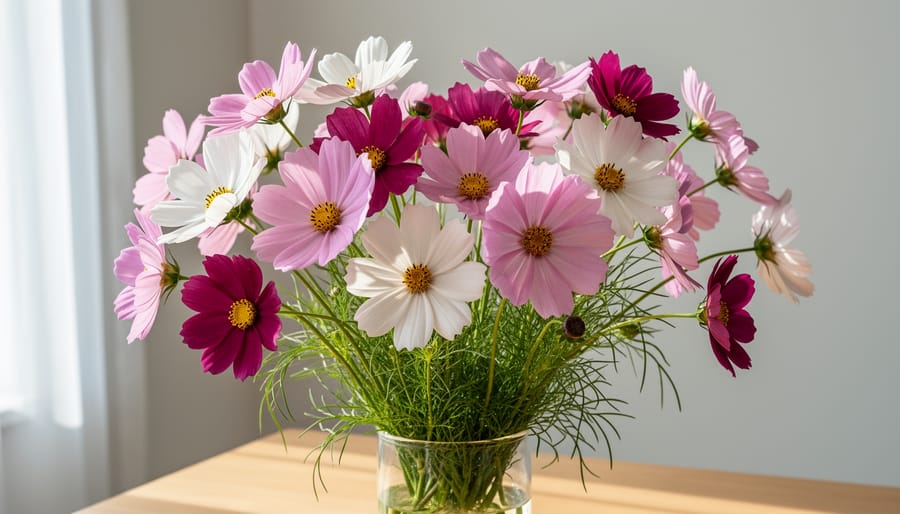
Cosmos are hard to beat when you’re after maximum visual impact for minimal investment. A single seed packet typically costs under five dollars and contains enough seeds to fill several square feet of garden space with graceful, daisy-like blooms from mid-summer straight through to frost.
What makes cosmos particularly appealing for budget-conscious growers is their self-seeding nature. Plant them once, and they’ll reliably return year after year, dropping seeds that germinate the following spring. This means your initial small investment keeps paying dividends without ongoing costs. They’re also remarkably forgiving of poor soil conditions, thriving even in lean, dry ground where other flowers struggle. This drought tolerance translates to lower water bills and less time spent with the hose.
From a floral design perspective, cosmos offer that sought-after airy, cottage-garden texture that softens arrangements and adds movement. Their long, sturdy stems make them ideal for cutting, and they hold well in the vase for seven to ten days with proper care. You’ll find two main forms: single blooms with an open center (perfect for a naturalistic look) and semi-double or double varieties like Cupcakes and Versailles that offer fuller, more structured petals.
The color range spans whites, pinks, crimsons, and even chocolate-burgundy shades in the Cosmos atrosanguineus species. For Canadian growers, flowers for a cutting garden should include cosmos because they handle our variable summer weather beautifully and produce continuously with regular deadheading. Learning proper flower gardening for beginners techniques like succession sowing will keep cosmos blooming well into fall. If you’re exploring how to start a flower garden for floral business, cosmos should be among your first plantings for reliable, low-maintenance inventory.
3. Sunflowers: Statement Blooms with Minimal Investment
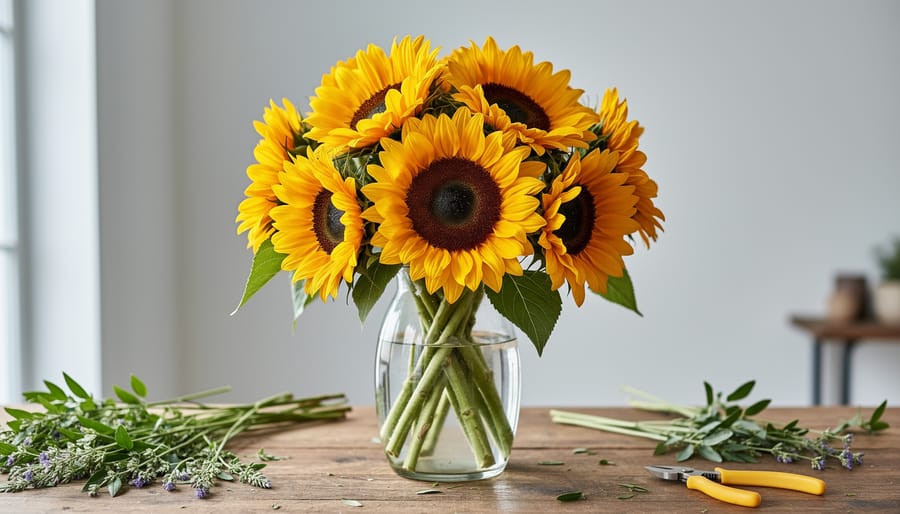
Sunflowers deliver exceptional impact for minimal cost, making them a smart choice for florists building inventory on a budget. A single seed packet typically costs $3-5 and contains enough seeds to produce dozens of blooms throughout the growing season. Most varieties germinate within 7-10 days in warm soil, meaning you can go from seed to saleable flower in as little as 60-75 days with fast-maturing cultivars.
The range of available varieties lets you serve different market needs without expanding your budget. Dwarf sunflowers like ‘Teddy Bear’ grow just 2-3 feet tall and work beautifully in compact gardens or containers, while mid-height varieties such as ‘ProCut Orange’ reach 4-5 feet and produce uniform stems ideal for bouquets. Giant sunflowers create dramatic focal points but require more garden space and staking.
For professional floral work, pollen-free varieties are worth seeking out. Traditional sunflowers shed pollen that stains fabrics and creates mess during transport, but pollen-free cultivars like ‘ProCut Plum’, ‘Sunrich Lemon’, and ‘Vincent’s Choice’ stay clean in arrangements and have longer vase life. These varieties cost slightly more per seed packet but save time in cleanup and reduce customer complaints.
Sunflowers remain in high demand across wedding work, farmers market bouquets, and everyday arrangements. Their bold presence commands premium pricing, often $3-5 per stem at wholesale and $8-12 retail. When you compare those returns to the pennies-per-seed investment, sunflowers rank among the most profitable flowers you can grow. For aspiring florists looking to maximize every dollar spent on their garden, understanding which flowers deliver the best profit margins helps prioritize your planting decisions.
Plant seeds every two weeks from late May through early July for continuous harvests, and you will have statement blooms available when other growers’ crops have finished.
4. Gladiolus: Perennial Value from Inexpensive Corms
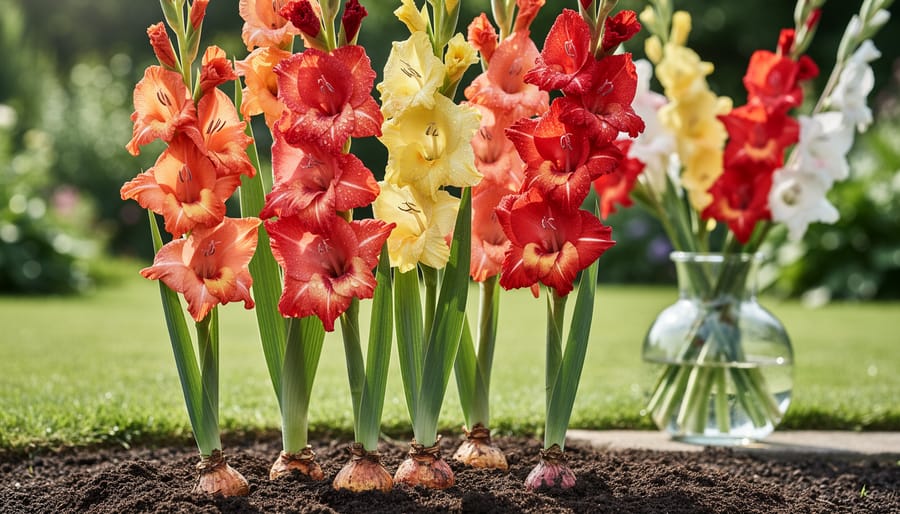
Gladiolus corms rank among the most economical investments for a cutting garden. You can purchase quality corms in bulk for as little as $0.50 to $1.00 each during spring sales, and that initial purchase multiplies naturally. Each planted corm produces cormlets around its base that you can harvest, store, and replant the following season, essentially giving you free stock once your garden is established.
The dramatic vertical spikes make gladiolus invaluable in professional arrangements, adding height and structure that commands premium prices. You’ll find colors spanning white, pink, burgundy, orange, yellow, and purple, with many bicolor varieties offering striking contrast. Most gladiolus stems produce 12 to 20 florets per spike, opening progressively from bottom to top, which extends their display life in bouquets.
For continuous bloom through summer, plant corms in succession every two weeks from late May through early July across most Canadian zones. Set them 4 to 6 inches deep and 6 inches apart in well-drained soil with full sun exposure. Each planting blooms approximately 90 days after planting, giving you a steady supply for arrangements rather than one overwhelming flush.
Before the first hard frost, lift the corms carefully, cut back the foliage, and cure them in a warm, dry location for two to three weeks. Store the dried corms in mesh bags or paper sacks in a cool, frost-free spot over winter. This simple storage routine preserves your investment and expands your stock year after year without additional expense.
5. Dahlias: Long-Term Investment with Spectacular Returns
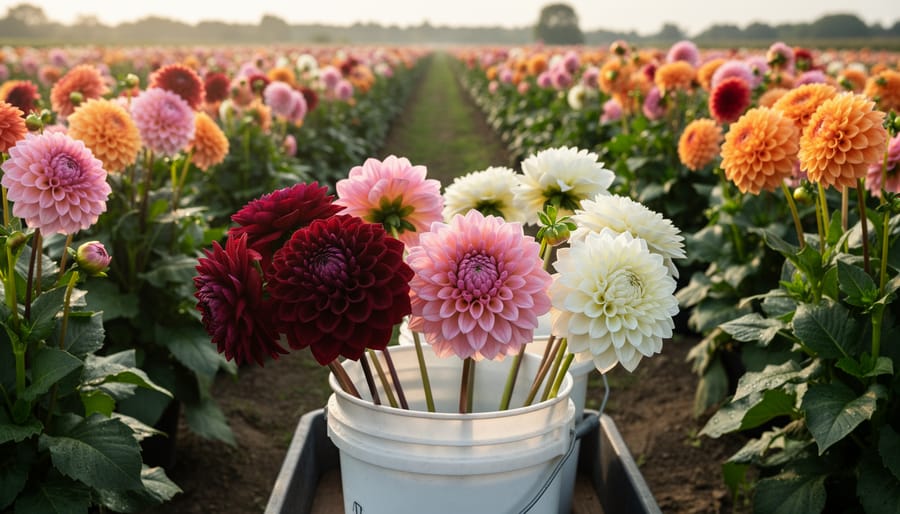
Dahlias represent one of the smartest long-term investments for flower gardeners working on a budget. While a single tuber might cost $3 to $8 compared to a $2 seed packet, that initial purchase multiplies rapidly. Each tuber you plant produces a clump of five to ten new tubers by season’s end, which you can divide and replant the following spring. Within two years, a $20 investment in four tubers can yield 40 or more plants, essentially creating free inventory for your cutting garden or floral business.
The bloom production justifies the upfront cost. A well-established dahlia plant produces 20 to 30 stems per season from midsummer until the first frost, with peak output in late summer when many other flowers have finished. This extended harvest window makes dahlias invaluable for maintaining consistent flower availability. In the professional floral market, dahlia stems command premium prices, often $3 to $8 per stem at farmers’ markets, because customers prize their intricate petal formations and saturated colors.
For beginners working within tight budgets, start with dinnerplate or decorative varieties in the $4 to $6 range rather than specialty or competition cultivars. Varieties like ‘Café au Lait’, ‘Kelvin Floodlight’, and ‘Otto’s Thrill’ offer reliable performance and strong market appeal. These workhorses bloom generously even in their first year and divide easily.
Storing tubers over winter requires only a cool, dry space like an unheated basement. This simple practice transforms dahlias from an annual expense into a perennial asset that literally grows your investment each season, making them ideal for aspiring florists building their flower inventory year over year.
6. Marigolds: Reliable Fillers at Rock-Bottom Prices
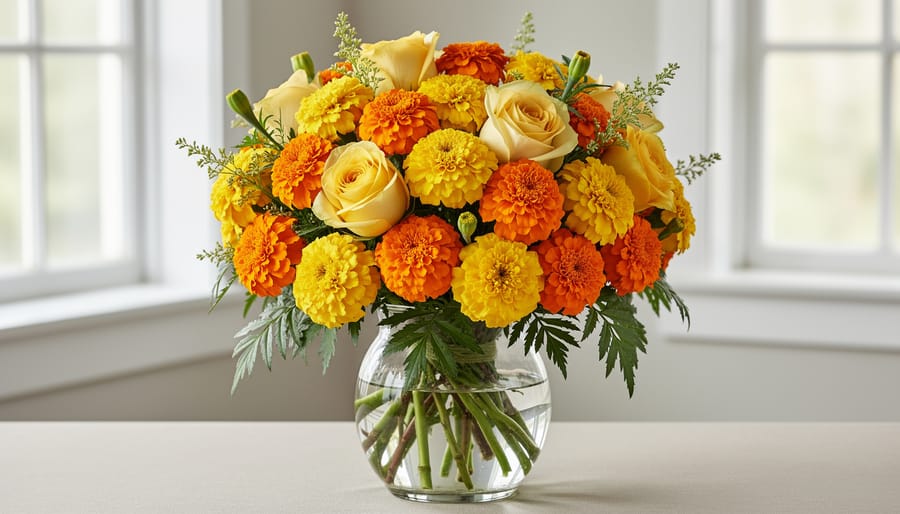
Marigolds rank among the most economical flowers you can grow, with seed packets often costing just a few dollars and containing dozens of seeds. A single packet can fill an entire garden bed or provide ample cut flowers for weeks of bouquets, making them an exceptional value for aspiring florists working within tight budgets.
Beyond their affordability, marigolds offer a practical bonus: natural pest-deterrent properties. Their pungent foliage repels aphids, whiteflies, and other common garden pests, which means you’ll spend less on pest control products throughout the growing season. Plant them as companions to more vulnerable flowers, and you’ve essentially created a living, blooming border that protects your entire cutting garden while reducing operating costs.
French marigolds produce compact, ball-shaped blooms in warm oranges, yellows, and reds, typically growing 15-30 cm tall. They work beautifully as filler in mixed bouquets and add cheerful pops of color to market bunches. African marigolds grow taller (up to 90 cm) with larger, more substantial blooms that can serve as secondary focal flowers in arrangements. Both varieties thrive in full sun, tolerate poor soil, and bloom continuously from early summer until frost when deadheaded regularly.
For maximum economy, start seeds indoors six weeks before your last frost date, or direct-sow after danger of frost has passed. The germination rate is typically excellent, and plants establish quickly with minimal fussing.
7. Sweet Peas: Fragrant Luxury from a Seed Packet
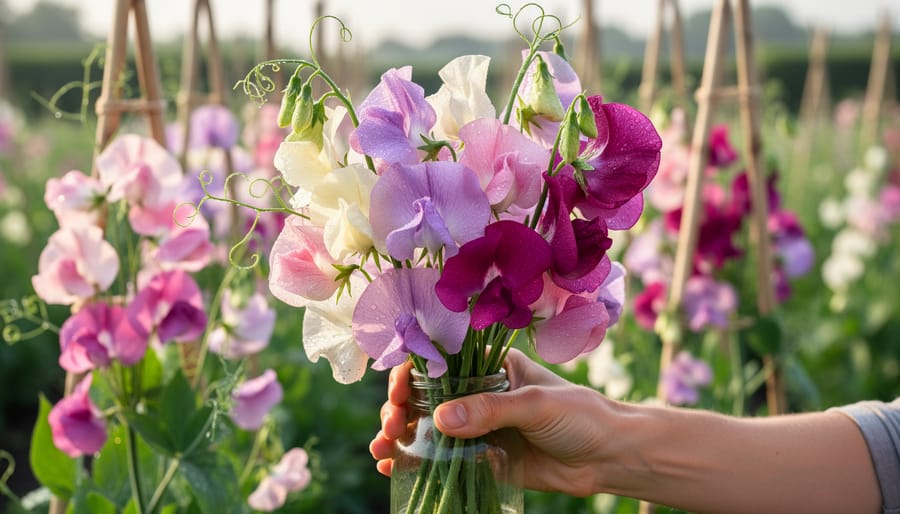
Sweet peas deliver the elegance and fragrance of premium florist flowers at a fraction of the cost. A single seed packet, often priced under five dollars, yields dozens of plants that produce hundreds of blooms throughout the growing season. Their intense, nostalgic scent and delicate ruffled petals make them highly sought after for wedding work and spring bouquets, where they command premium prices despite their humble origins.
These cool-season annuals thrive in Canada’s spring weather, germinating in soil as cool as 10°C and actually preferring the mild temperatures that cause many summer flowers to falter. Plant them as early as the ground can be worked, typically late March to early April in most zones. Sweet peas are true cut-and-come-again producers. The more you harvest, the more they bloom, making them ideal for aspiring florists building inventory. A well-maintained row can provide armloads of stems from May through early July.
For continuous production, try succession planting every two weeks through mid-May. This staggers your bloom periods and extends your harvest window well into summer. Choose tall varieties like ‘Spencer’ types for the longest stems, ideal for arrangement work. Provide support with netting or trellises early, as sweet peas climb vigorously and produce straighter stems when properly guided.
Soak seeds overnight before planting to speed germination, and pinch seedlings at 10 centimeters to encourage branching. Those simple steps transform a packet of seeds into a profitable crop that rivals anything from a wholesale supplier.
8. Snapdragons: Cool-Season Workhorses
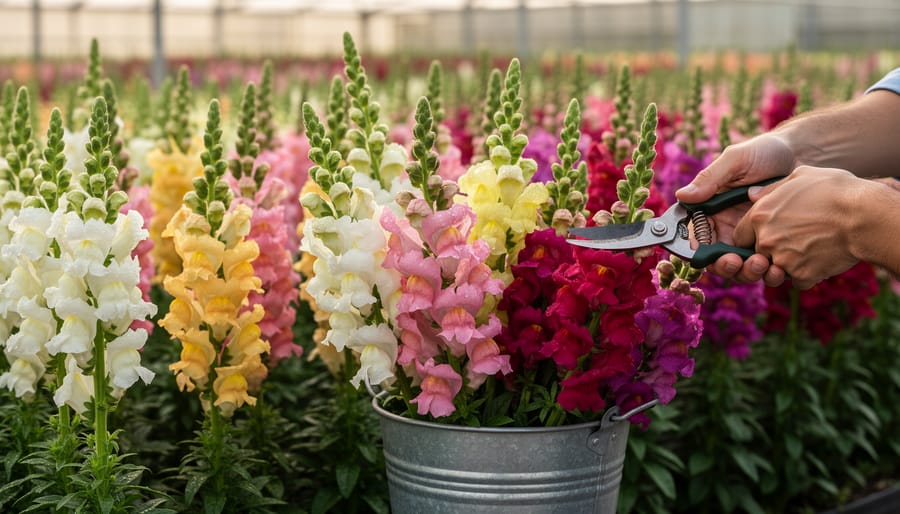
Snapdragons offer exceptional value for flower gardeners working within a budget, particularly in Canada’s cooler climate zones. Seeds cost just a few dollars per packet containing hundreds of seeds, while seedlings typically run under $3 each at garden centers. This makes them one of the most economical choices among quick-growing annuals for cutting gardens.
Their vertical spike form adds essential structure to arrangements, providing height variation that florists rely on for professional-looking designs. You’ll find snapdragons in heights ranging from dwarf 6-inch varieties to towering 36-inch stems, with colors spanning white, pink, yellow, orange, red, and bicolors.
What truly sets snapdragons apart economically is their extended harvest potential. In many Canadian zones (4-7), you can grow two crops per year: start seeds indoors 8-10 weeks before your last frost for spring blooms, then direct-sow in late summer for fall production when temperatures cool. They actually prefer cooler weather and can tolerate light frosts, continuing to bloom when heat-loving flowers have finished.
Cut stems when the bottom third of florets have opened, and they’ll last 7-10 days in water. The more you cut, the more side shoots develop, giving you continuous blooms throughout the season from a single planting.
9. Celosia: Textural Interest Without the Price Tag
Celosia delivers eye-catching texture and vibrant color without straining your budget. Seeds cost just a few dollars per packet, yet each plant produces multiple stems of distinctive blooms throughout the growing season. You’ll find two main forms: feathery plumes that add soft, vertical interest and crinkled cockscomb varieties that create bold focal points in arrangements.
This heat-loving annual thrives in Canadian summers once the soil warms, making it perfect for filling mid-season gaps in your cutting garden. Unlike more delicate flowers that wilt quickly, celosia stems last 7-10 days in water, giving your arrangements exceptional longevity. Clients appreciate the unusual forms and saturated colors ranging from deep burgundy to neon pink and golden yellow.
Celosia’s versatility extends beyond fresh cuts. The blooms dry beautifully while retaining their color, allowing you to create year-round inventory from a single summer planting. Hang stems upside down in bunches for two weeks, and you’ll have premium dried material that commands good prices at markets or adds value to winter arrangements.
For those building a fast flower garden celosia germinates quickly and begins blooming within 10-12 weeks of sowing. Direct seed after your last frost date, or start indoors 4-6 weeks earlier for even quicker results. The plants require minimal care beyond regular watering and benefit from warm conditions that many other garden flowers find challenging.
10. Rudbeckia (Black-Eyed Susans): Perennial Savings
Rudbeckia offers perhaps the best small business ROI of any flower garden plant when you factor in longevity and minimal upkeep. Unlike annuals that require replanting every spring, these cheerful perennials return year after year with virtually no intervention. You’ll spend roughly $4-8 for a three-pack of starter plants or $3 for a seed packet that can produce dozens of plants, then enjoy harvests for 5-10 years from that single investment.
The self-seeding habit means your initial planting naturally expands over time. By the third season, you’ll likely have double or triple your original plant count without purchasing anything additional. This makes rudbeckia ideal for building cutting garden inventory on a tight budget. The bright yellow blooms with dark centers work beautifully in mixed arrangements, adding a cheerful, natural aesthetic that customers love in farmers market bouquets and casual wedding work.
Hardiness is another economic advantage. Rudbeckia thrives in zones 3-9, covering all Canadian growing regions from coast to coast. They tolerate poor soil, drought, and neglect better than most garden flowers, which means you won’t spend money on amendments, frequent watering, or pest treatments. Once established, they’re practically indestructible.
The plants bloom prolifically from midsummer through fall, providing consistent harvest when many annuals are declining. Each stem lasts 7-10 days in a vase. For florists building sustainable growing operations, rudbeckia delivers dependable returns with almost zero ongoing costs.
Making Your Flower Garden Even More Economical
Growing your own cut flowers becomes far more affordable when you master a few core techniques. Starting seeds indoors extends your growing season and costs a fraction of buying transplants, a packet of zinnia or cosmos seeds runs just a few dollars and produces dozens of plants. Invest in basic seed-starting supplies once (trays, grow lights, and seed-starting mix), and you’ll reuse them for years.
Learning to divide perennials like dahlias and rudbeckia multiplies your stock without spending a cent. One dahlia tuber purchased this year can become five or six tubers to replant next spring. Similarly, gladiolus corms multiply underground, and lifting them in fall for winter storage means you’ll have more corms to plant each season.
Composting your garden and kitchen waste creates free, nutrient-rich soil amendments that would otherwise cost $15 to $30 per bag. A simple compost bin transforms autumn leaves, spent flower stems, and vegetable scraps into black gold that feeds your cutting garden year after year.
The Canadian floristry community offers mentorship opportunities that dramatically reduce your learning curve and startup costs. Experienced growers often share plant divisions, proven seed varieties, and region-specific growing advice. Enrolling in a floristry course connects you with instructors and peers who understand budget constraints and can guide you toward the most economical plant choices for your zone. Local flower farming groups and online forums facilitate plant swaps and bulk seed purchases that slash costs while building the knowledge base you need to turn your garden into a profitable venture.
Common Questions About Budget Flower Gardening
Can I grow professional-quality flowers from seeds?
Absolutely. Many professional florists start the majority of their stock from seed, particularly zinnias, cosmos, and sunflowers. The key is choosing quality seed from reputable suppliers and following proper germination techniques, the flowers themselves won’t know whether they started as a $3 seed packet or a $15 plug tray.
How much should I budget for a starter cutting garden?
You can establish a productive 100-square-foot cutting garden for $50-$75 if you start from seed and use basic amendments. This covers seeds for 8-10 varieties, potting mix for starting, and essential supplies. If you’re purchasing some plants as seedlings or adding perennial bulbs like dahlias, budget $150-$200 for your first season.
What tools do I need to get started economically?
Your essential toolkit is modest: a sturdy trowel, bypass pruners, a watering can or hose, and seed-starting trays (which you can reuse for years). A soil thermometer helps with timing, but isn’t strictly necessary. Skip expensive gadgets in your first season and invest in quality cutting tools instead, since clean cuts extend vase life.
When should I start seeds indoors in Canada?
Timing depends on your zone and the plant’s cold tolerance. In most Canadian regions, start warm-season flowers like zinnias and celosia 4-6 weeks before your last frost date (typically late April to early June depending on location). Cool-season crops like snapdragons can go in 8-10 weeks earlier, and sweet peas can be direct-sown as soon as soil can be worked.
How do I know which plants will return next year?
Check the plant’s hardiness rating against your Canadian growing zone. True perennials like rudbeckia survive winter and return annually, while tender perennials like dahlias require lifting and storing in most Canadian climates. Annuals like zinnias complete their lifecycle in one season, though some self-seed readily if you let a few blooms go to seed.
Understanding these fundamentals helps you make informed decisions as you build your cutting garden. Many successful flower farmers started exactly where you are now, learning through hands-on experience which varieties thrive in their specific microclimate and soil conditions. If you’re considering turning your growing hobby into a business, exploring structured learning through online floristry courses in Canada can accelerate your skills in both cultivation and design techniques that maximize the value of every stem you grow.
The beauty of budget flower gardening is that it rewards observation and experimentation more than capital investment. Keep notes on what works in your space, connect with other growers through local floristry associations, and don’t hesitate to ask experienced mentors about their propagation secrets. The floristry community is remarkably generous with knowledge, and you’ll find that mentorship opportunities often include plant swaps and shared resources that stretch your budget even further while building valuable professional relationships.
Creating a thriving flower garden on a budget isn’t just possible, it’s a strategic advantage. The ten plants we’ve covered prove that professional-quality blooms don’t require premium investment. By focusing on high-yield varieties like zinnias and cosmos, propagating your own dahlias and gladiolus, and mastering seed-starting techniques, you build both a sustainable flower supply and valuable hands-on skills that translate directly to business success.
Budget constraints shouldn’t discourage your floristry ambitions. Many successful Canadian flower growers started exactly where you are now, learning through trial and gradual expansion. If you want to deepen your skills beyond the garden, consider exploring structured learning through floristry courses that complement your growing knowledge with design expertise. Connecting with experienced mentors can also accelerate your journey, offering practical wisdom on everything from variety selection to business planning.
The beauty of this approach is its low-risk nature. Start small with a few packets of seeds or a handful of bulbs. As your confidence and garden expand, so does your inventory. Each season teaches you which varieties thrive in your specific conditions, which colors sell best, and how to time plantings for continuous supply. You’re not just growing flowers, you’re cultivating a business foundation, one bloom at a time.