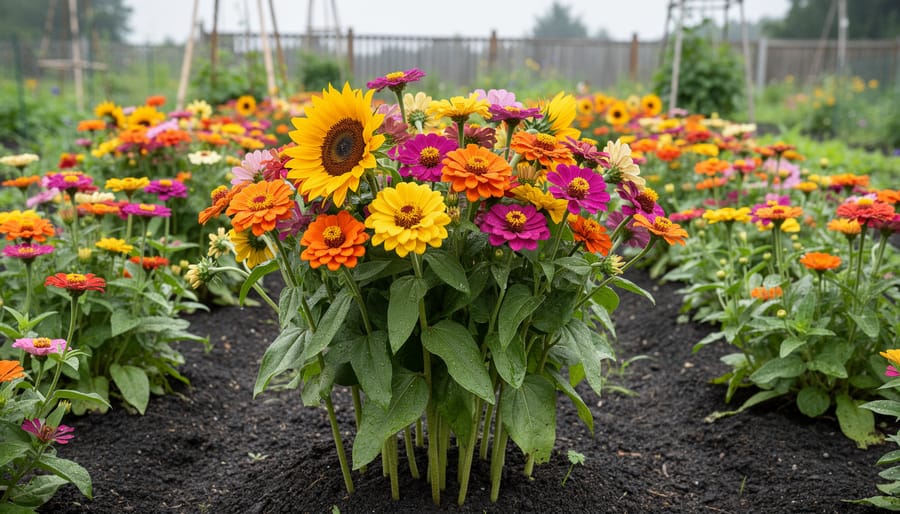
The fastest annual flowers go from seed to bloom in 6 to 10 weeks, transforming empty garden beds or cutting patches into productive color by midsummer. For Canadian florists and flower growers working within a short growing season, quick-blooming annuals like sunflowers, zinnias, and cosmos offer reliable harvests without the wait, making them essential for both business bouquets and skill-building practice. Whether you’re planning your first cutting garden to supplement a Canadian florist salary or filling gaps in an established flower operation, these eight varieties deliver consistent stem production from direct sowing through fall frost.
Speed matters when you’re building inventory or learning floral design. Annual flowers that bloom within two months let you harvest multiple succession plantings in one season, test new varieties without long commitments, and respond quickly to market demand. The selections below prioritize not only rapid germination and flowering but also strong stem length, vase life, and adaptability to Canadian conditions from zone 3 through 7. Each entry includes precise seed-to-bloom timing, sowing methods, and harvest guidance so you can plan production schedules with confidence. By choosing the right mix of these proven performers, you’ll keep your cooler stocked and your design skills sharp from June straight through October.
Why Quick-Growing Annuals Matter for Florists and Flower Enthusiasts
Quick-growing annuals change everything for florists and flower enthusiasts. When you’re running a small business in floristry or just starting your journey with flowers, waiting months for results tests patience and eats into your season. These fast bloomers deliver flowers in your hands within four to ten weeks from seed, which means you can see the fruits of your work while the weather still cooperates.
That shortened timeline opens up possibilities unavailable with slower varieties. You can plant in May, harvest in July, then sow again for September blooms. Multiple succession plantings in a single Canadian growing season mean continuous supply rather than a brief flush, critical whether you’re practicing techniques or fulfilling client orders. Each planting cycle also becomes a learning opportunity. New growers gain confidence quickly when their efforts produce results in weeks, not months. You experiment with spacing, try different soil amendments, test watering schedules, and see the outcomes while the lessons are fresh.
Fast annuals also solve practical problems. Need filler for an arrangement next week? A patch of alyssum or calendula grown from transplants will likely have blooms. Gap in your cutting garden after harvesting tulips? Direct-sow cosmos or nasturtiums to fill the space by midsummer. This flexibility supports skill-building and entrepreneurial ventures alike, giving you material to work with throughout the season.
How We Selected These Quick-Growing Annuals
Choosing the right quick-growing annuals for this list wasn’t guesswork. We consulted experienced floristry mentors, cut flower growers across Canada, and drew on hands-on testing in gardens from Ontario to British Columbia. The goal was simple: identify annuals that deliver blooms fast, perform reliably in real-world conditions, and serve aspiring florists and flower enthusiasts well.
Each flower on this list met strict criteria:
- Germination speed: Seeds sprout within 5 to 14 days under typical conditions
- Days to first bloom: Flowers appear within 6 to 10 weeks from sowing
- Ease of care: Minimal fussing required, suitable for beginners
- Canadian climate performance: Thrives in cool springs and variable summer weather
- Cut flower quality: Strong stems, good vase life, and visual appeal in arrangements
- Seed and transplant availability: Readily accessible through Canadian nurseries and seed suppliers
We prioritized varieties that build confidence quickly. When you see blooms in weeks instead of months, you learn faster, experiment more freely, and gain momentum in your floristry practice. These aren’t just garden fillers, they’re practical training tools that reward your effort with tangible, beautiful results you can cut, arrange, and enjoy.
1. Sweet Alyssum, Fragrant Ground Cover in Just 6 Weeks
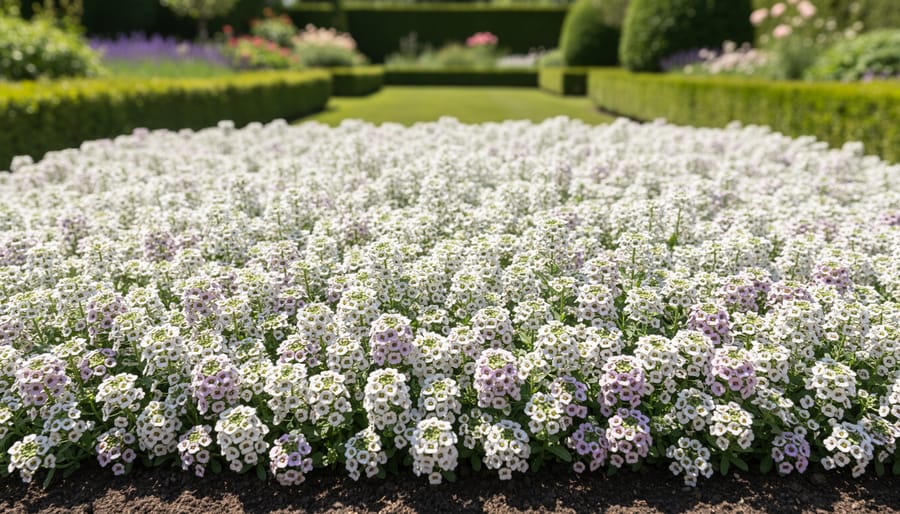
Sweet alyssum delivers fragrant blooms faster than almost any other annual, germinating in just 5-10 days and flowering within six weeks of sowing. This low-growing charmer forms dense mats of tiny flowers in white, pink, or purple, releasing a honey-sweet scent that intensifies in the evening.
The plant grows 4-8 inches tall and spreads 10-12 inches wide, making it perfect for edging beds, filling gaps between taller plants, or cascading from containers. In Canadian gardens, sweet alyssum thrives in cool spring temperatures and tolerates light frosts, often self-seeding reliably for surprise volunteers the following season.
For cut flower work, use sweet alyssum as delicate filler in small arrangements or boutonnieres. The stems are short but abundant, and the blooms hold their fragrance indoors. Harvest when clusters are fully open but before individual flowers fade.
To maximize speed, direct-sow after your last frost date or start seeds indoors 3-4 weeks earlier. Sweet alyssum prefers full sun but tolerates partial shade in hot climates. Water regularly during dry spells, and deadhead spent blooms to encourage continuous flowering through fall. The self-seeding habit means you’ll enjoy this quick bloomer year after year with minimal effort.
2. Calendula, Hardy, Edible Blooms in 8 Weeks
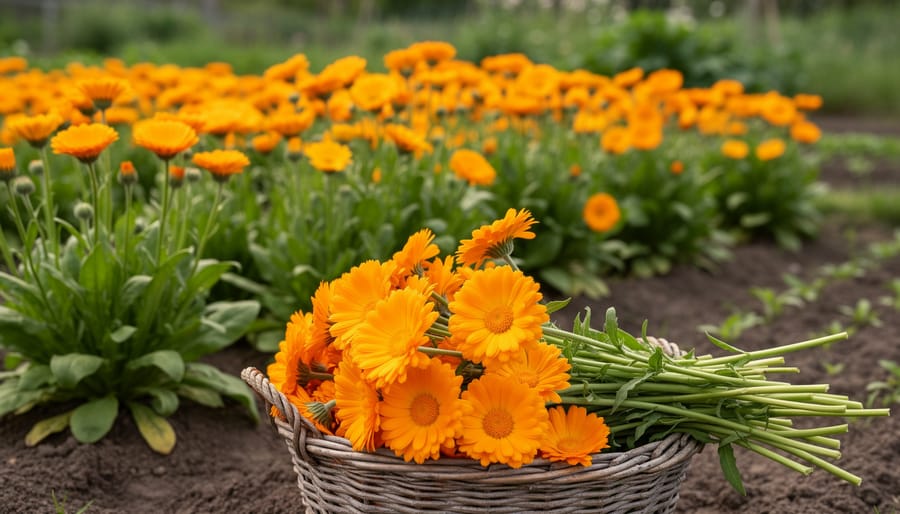
Calendula thrives in cooler conditions, making it perfect for Canadian spring gardens. Seeds germinate in 7-14 days when sown directly into prepared soil once the ground can be worked, often weeks before your last frost date. From there, you’ll see cheerful orange and yellow blooms in just 8 weeks, reliably delivering color when many annuals are still establishing themselves.
The petals are edible with a slightly peppery flavor, adding visual interest to salads and garnishes. Historically used in herbal medicine for skin-soothing properties, calendula brings a practical dimension beyond aesthetics. For florists, the flowers are workhorses: sturdy stems, good vase life (typically 7-10 days), and a warm color palette that complements nearly any arrangement.
Calendula tolerates light frost, so you can plant it early and again in mid-summer for fall blooms. This succession planting approach ensures a steady supply throughout the growing season, invaluable if you’re practicing your design skills or supplying a small wedding or event. Pinch back young plants to encourage branching and more stems per plant. Deadhead spent flowers regularly to keep production going; plants that go to seed will stop blooming. With minimal fuss and maximum return, calendula rewards new growers with consistent results and builds confidence quickly.
3. Nasturtium, Vibrant Color and Edible Flowers in 7 Weeks
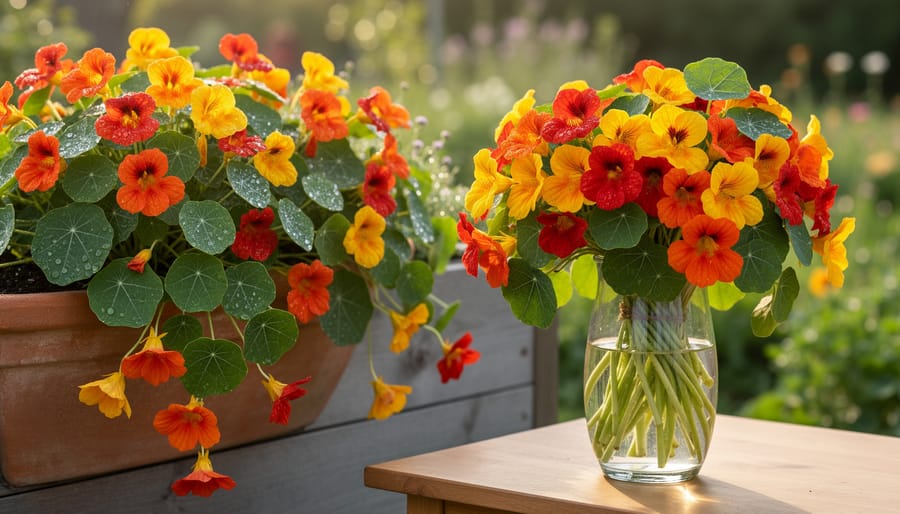
Nasturtium stands out as one of the most beginner-friendly quick-growing annuals you can plant. The large, pea-sized seeds germinate reliably in just 7 to 12 days, and you’ll see cheerful blooms in about seven weeks from sowing. This speed makes nasturtiums perfect for aspiring florists who want fast results while building their growing confidence.
Both the rounded leaves and the vibrant flowers are edible, with a peppery kick that adds interest to salads and garnishes. The blooms come in bright oranges, sunny yellows, and bold reds, colors that bring instant energy to bouquets and arrangements. You can choose trailing varieties to cascade over containers or edges, or compact bushing types for borders and cutting gardens.
Nasturtiums thrive with minimal fuss. They actually prefer lean soil and don’t need fertilizer, which can produce lush foliage at the expense of flowers. Direct-sow seeds after the last frost, water during dry spells, and watch them take off. They tolerate a range of conditions and keep blooming prolifically through summer. In Canadian gardens, nasturtiums perform reliably even in cooler regions, making them an ideal choice for new growers experimenting with cut flowers or edible florals. Their rapid growth and forgiving nature mean you’ll gain hands-on experience quickly.
4. Bachelor’s Button (Cornflower), Classic Cut Flower in 8 Weeks
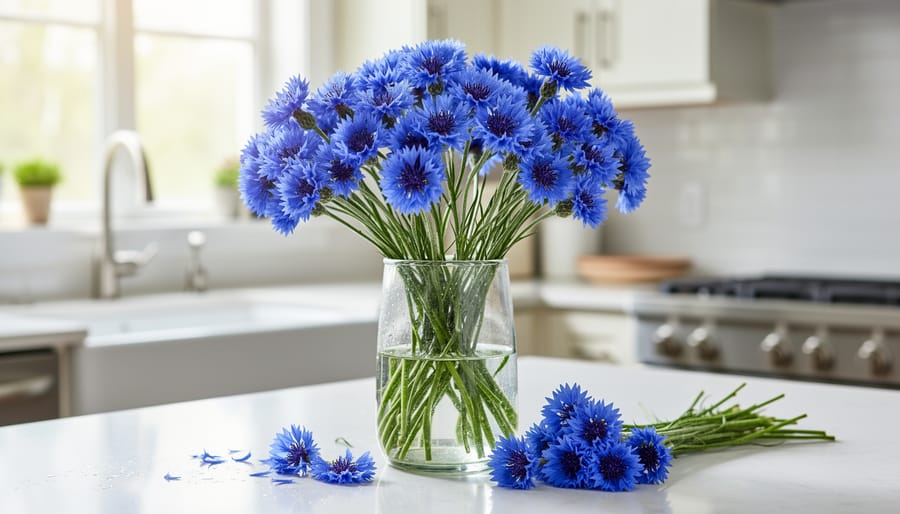
Bachelor’s button (Centaurea cyanus) germinates reliably in 7-14 days and reaches full bloom in just 8 weeks from seed, making it one of the most dependable quick-growing annuals for cut flower production. The flowers hold in the vase for 7-10 days, often longer with proper conditioning, which gives you ample time to practice arrangement techniques and experiment with color combinations. You’ll find varieties in classic cornflower blue, soft pink, crisp white, and deep burgundy, all with that distinctive fringed petal texture florists love.
What sets bachelor’s button apart is its resilience in variable Canadian weather. It tolerates cool spring temperatures and light frosts, so you can direct-sow as soon as the soil is workable, and it continues blooming through summer heat waves without wilting or losing vigor. The stems grow straight and sturdy, typically 60-90 cm tall, which means minimal waste when you’re harvesting for arrangements. For small-scale cutting gardens, sow every two weeks from early spring through midsummer to maintain a steady supply. This flower rewards beginners with consistent results and teaches you harvest timing, stem strength, and color theory, all essential skills as you build your floristry practice.
5. Marigold, Bright, Pest-Deterring Blooms in 8 Weeks
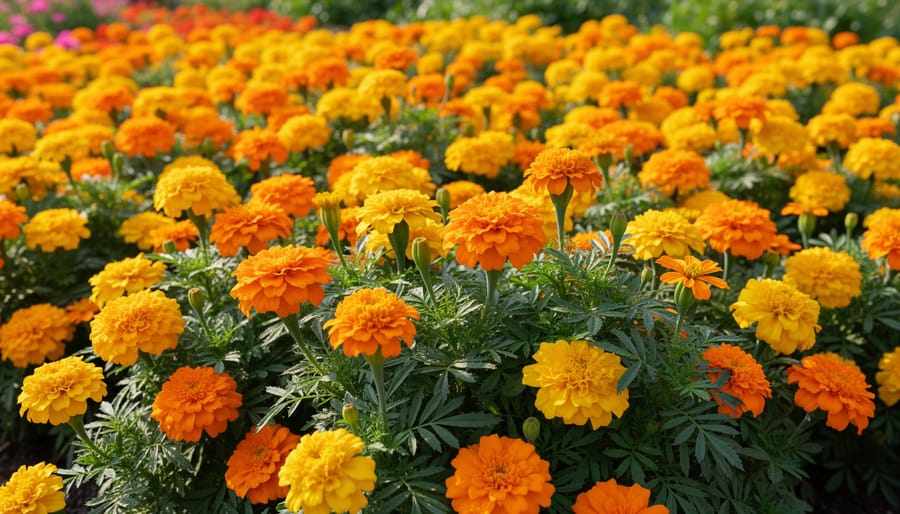
Marigolds are workhorses in the fast-blooming annual lineup, germinating in just 5 to 7 days and reaching their first flush of blooms within 8 weeks of sowing. That speed makes them perfect for succession planting throughout the Canadian growing season, ensuring you have fresh flowers from early summer right through to the first hard frost.
You’ll find marigolds in an impressive range of sizes. Dwarf French varieties stay compact at 6 to 12 inches, ideal for edging beds or tucking into containers. African marigolds stretch to 2 to 3 feet tall, producing large, showy blooms perfect for statement arrangements. Signet marigolds offer delicate, edible flowers for garnishing, while Triploid hybrids combine compact growth with prolific flowering. All deliver vibrant yellows, oranges, and rusty reds that add warmth to any bouquet or garden display.
Beyond their beauty, marigolds earn their keep by deterring aphids, whiteflies, and even rabbits with their pungent foliage. Plant them among your cut flower rows, and they’ll help protect more delicate blooms while providing their own long-lasting stems for arrangements. That vase life runs 7 to 10 days, and they hold up well in the heat of a Canadian summer. Their popularity here isn’t accidental, they’re reliable, cheerful, and forgiving, making them a natural choice for anyone building floristry skills or stocking a small cutting garden.
6. Sunflower (Dwarf and Branching Types), Show-Stopping Blooms in 8-10 Weeks
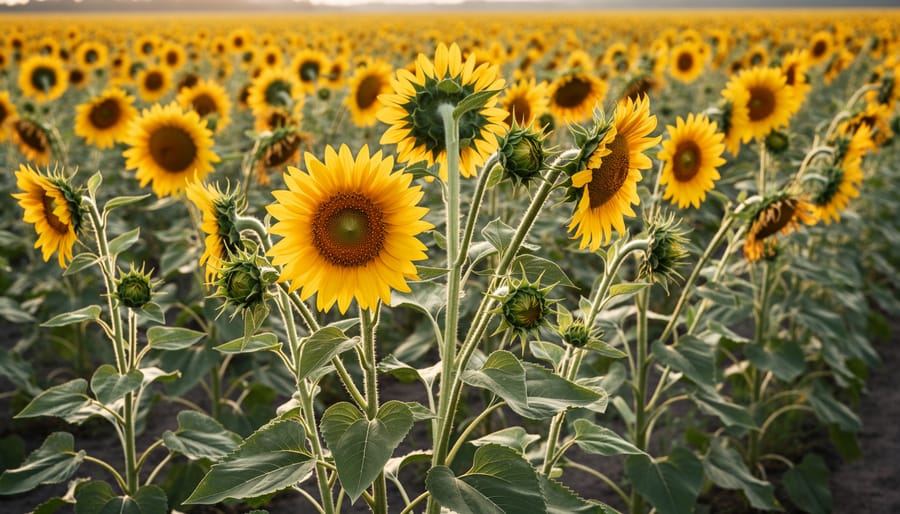
Sunflowers germinate in just seven to ten days, and even the tallest varieties bloom within eight to ten weeks from seed, making them one of the quickest routes to show-stopping garden color. For florists and cut flower growers in Canada, branching sunflower varieties are particularly valuable: instead of a single stem, they produce multiple blooms per plant, extending your harvest window and giving you more stems per square foot. Look for cultivars like ‘ProCut’ or ‘Sunrich’, which offer sturdy stems, uniform heights, and consistent bloom sizes perfect for arrangements.
Pollen-free varieties are a game-changer if you’re growing for bouquets or events. They stay cleaner longer, won’t stain fabric or hands, and have excellent vase life, often ten days or more with fresh water and a clean cut. Dwarf sunflowers, topping out at two to three feet, work beautifully in containers or small gardens, while taller branching types (four to six feet) thrive in full-sun beds and tolerate Canada’s warm, dry summer stretches without wilting.
Sunflowers are synonymous with joy in floristry, and their rapid growth makes them ideal for building confidence and hands-on skill. Direct-sow after your last frost date for the fastest results, thin seedlings to twelve inches apart, and watch them rocket skyward. Their iconic presence and reliable performance make sunflowers a must-have for any aspiring florist’s cutting garden.
7. Cosmos, Delicate, Airy Flowers in 7-9 Weeks
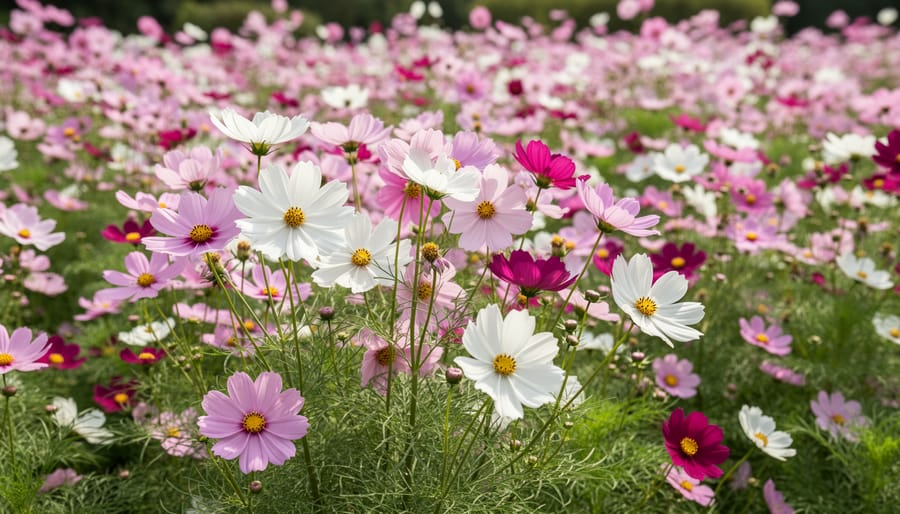
Cosmos are wonderfully forgiving annuals that reward minimal effort with maximum blooms. Seeds germinate in 7-10 days, and plants typically flower within 7-9 weeks from sowing, making them one of the most reliable quick results in the garden. Their delicate, daisy-like blooms sit atop tall, sturdy stems with feathery foliage that adds texture and movement to beds and arrangements alike.
These flowers thrive in heat and actually perform better with some neglect, overwatering or over-fertilizing can reduce blooming. Once established, cosmos tolerate drought remarkably well and continue flowering prolifically until frost. They’re exceptionally well-suited to Canadian summers, handling both warm stretches and cooler nights without complaint.
For florists and growers building a cutting garden, cosmos offer exceptional value. The long stems (often 24-36 inches) are perfect for arrangements, and each plant produces dozens of blooms throughout the season. Varieties like ‘Sensation Mix’ and ‘Cupcakes’ provide color variety, while ‘Xanthos’ offers unique soft yellow tones. Deadheading encourages more flowers, though even without it, cosmos keep blooming. Their reliability and minimal care requirements make them ideal for anyone exploring cut flower production or developing skills that support florist earnings through seasonal flower sales.
8. Zinnia, Bold, Long-Lasting Cut Flowers in 8 Weeks
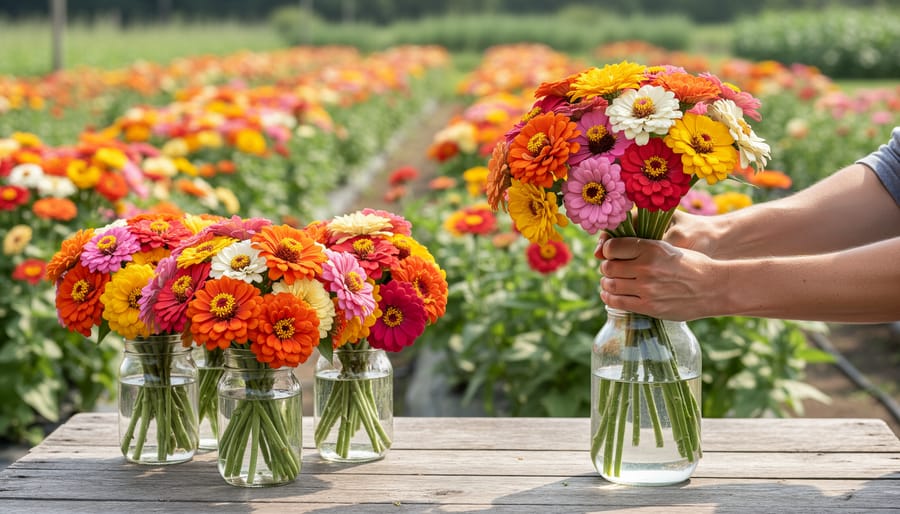
Zinnias stand out as one of the most reliable quick-growing annuals for aspiring florists and cut flower growers. Seeds germinate in just 5-7 days when planted in warm soil, and the first blooms appear approximately 8 weeks from sowing. This speed, combined with exceptional vase life of up to 2 weeks, makes zinnias a staple in professional arrangements and backyard cutting gardens alike.
The color and form range is remarkable: from single-petaled varieties in vibrant oranges and pinks to fully double dahlias in burgundy, white, lime green, and coral. Tall varieties like ‘Benary’s Giant’ and ‘Oklahoma’ series reach 90-120 cm, producing long, sturdy stems perfect for arrangements. Heat tolerance is excellent, and zinnias thrive during Canadian summer warmth without wilting.
Disease-resistant varieties such as ‘Profusion’ and ‘Zinderella’ minimize powdery mildew concerns, especially when planted with adequate spacing and good air circulation. For continuous harvests throughout the season, practice succession planting: sow new seeds every 2-3 weeks from late spring through midsummer. This strategy ensures fresh blooms from July through the first hard frost, providing consistent supply for floristry practice or small business ventures. Cut stems when flowers are fully open in the morning for maximum vase life.
Growing Tips for Maximum Speed and Success
Starting seeds indoors 4-6 weeks before your last expected frost date gives you a head start on the growing season and can shave a full month off the time to your first blooms. Prepare seed trays with quality potting mix, keep them consistently moist but not waterlogged, and place them in a warm spot or under grow lights. Once seedlings develop their first true leaves, begin hardening them off gradually by exposing them to outdoor conditions for increasing periods over 7-10 days.
When transplanting into your garden or cutting beds, enrich the soil with compost or well-rotted manure to provide nutrients and improve drainage. Water consistently, especially during dry spells, as stress can delay flowering and reduce bloom size. Deadheading spent flowers is essential for all eight varieties covered here: it redirects the plant’s energy from seed production back into making more blooms, extending your harvest window significantly.
For aspiring florists and flower business owners, these quick-growing annuals offer the perfect opportunity for hands-on learning. Each succession planting becomes a real-world lesson in timing, spacing, and harvest techniques. Don’t be afraid to experiment with different sowing dates, try unfamiliar varieties from the list, or test which flowers perform best in your specific microclimate. This practical experience builds the confidence and intuition that floristry courses and mentorship programs can then refine into professional expertise.
Common Questions About Quick-Growing Annual Flowers
Can I direct-sow these quick growing annual flowers in Canada?
Yes, all eight flowers on this list can be direct-sown outdoors after your last frost date. Marigolds, nasturtiums, and sunflowers are particularly reliable when sown directly into prepared soil, while cosmos and zinnias thrive with direct seeding in warmer soil temperatures above 15°C.
How do I know when to harvest these flowers for arrangements?
Harvest early in the morning when stems are fully hydrated, cutting when blooms are just beginning to open rather than fully mature. For zinnias and sunflowers, check that petals have unfurled but centers remain tight; for cosmos and calendula, cut when buds show color but haven’t fully expanded, as they’ll continue opening in the vase.
What if my Canadian growing season is short?
Start seeds indoors 4-6 weeks before your last frost date to gain a significant head start, and focus on the fastest varieties like sweet alyssum (6 weeks) and nasturtiums (7 weeks). Consider using row covers or cold frames to extend both ends of the season, and practice succession planting every two weeks to maximize your harvest window.
Are these quick growing annual flowers suitable for container growing?
Absolutely. Dwarf marigolds, sweet alyssum, nasturtiums, and smaller zinnia varieties perform beautifully in containers with at least 30cm depth and good drainage. This approach works well for aspiring florists practicing their craft on balconies or small urban spaces before starting a floristry career.
To extend your bloom season, deadhead spent flowers every few days to encourage continuous production rather than seed formation. Plant new successions every two to three weeks from late spring through midsummer, ensuring fresh blooms well into fall. Many of these annuals, particularly calendula and bachelor’s button, tolerate light frosts and will continue blooming into October across much of Canada, giving you extra weeks of cutting material when other garden flowers have finished.
Quick-growing annual flowers give you fast results and real confidence, whether you’re practicing your first floral arrangements or building a small flower business. These eight varieties prove you don’t need years of experience or a long growing season to fill your garden and your vases with beautiful blooms.
Starting with seeds that germinate in days and flowers that bloom within weeks transforms your learning curve. You’ll see which colors work together, which stems last longest, and how to time your plantings for continuous harvests. That hands-on experience builds skills no textbook can teach.
If floristry intrigues you, let these fast annuals be your entry point. Grow a few varieties this season, cut your own stems, and experiment with simple arrangements. When you’re ready to deepen your knowledge, explore floristry courses and mentorship opportunities through Tadine’s resources. Connecting with experienced florists accelerates your growth just as surely as these quick bloomers accelerate your garden.
The beauty of working with flowers is that every season brings new chances to learn, create, and grow. Plant these fast annuals, enjoy the rapid rewards, and discover where your passion for flowers can take you.