
Evaluate course credentials by verifying instructor qualifications through provincial business registries and requesting student portfolios from recent graduates. Contact three to five past students directly—reputable schools willingly provide references—and ask specific questions about hands-on hours, flower variety exposure, and post-graduation support. This vetting process separates established programs from rushed weekend workshops that leave you unprepared for professional work.
Calculate the true cost per contact hour, not just total tuition. A $2,500 course offering 40 hours of direct instruction ($62.50 per hour) delivers better value than a $1,200 course with only 12 hours of actual teaching ($100 per hour). Factor in material costs, which vary dramatically—quality programs include premium flowers in tuition while budget courses charge separately for supplies, inflating your actual investment by 30-50%.
Prioritize programs offering business fundamentals alongside design techniques. Canadian florists need knowledge of seasonal flower availability, supplier relationships, pricing strategies, and customer management—not just arrangement skills. Schools that include mentorship components or industry connections provide pathways beyond graduation, helping you navigate the transition from student to professional with confidence.
Examine the curriculum’s balance between classical techniques and contemporary trends. Foundation skills in colour theory, mechanics, and traditional designs remain essential, but modern floristry demands knowledge of sustainable practices, installation work, and social media marketing. The strongest beginner programs acknowledge that today’s florists combine artistry with entrepreneurship, preparing you for both creative expression and business viability in Canada’s competitive floral industry.
Understanding Your Floristry Goals and Learning Style
Are You Building a Career or Exploring a Hobby?
Before enrolling in any floristry course, take a moment to honestly assess your intentions. Are you looking to launch a professional career, or are you simply curious about flower arranging as a creative outlet? This distinction will significantly influence which type of course best suits your needs.
If your career aspirations include opening a floral business, working in a flower shop, or providing professional services for weddings and events, you’ll want to seek comprehensive certification programs. These typically span several weeks or months and cover essential business topics alongside design techniques. In Canada, professional programs often include modules on floral industry standards, business management, pricing strategies, and vendor relationships. They require a more substantial time commitment and financial investment, but they prepare you with the credentials and practical skills employers and clients expect.
On the other hand, recreational workshops are perfect for hobbyists who want to create beautiful arrangements for their homes or as thoughtful gifts for friends. These courses usually run from a few hours to a weekend and focus purely on creative techniques and design fundamentals. The investment is considerably lower, and the pressure is minimal since you’re learning purely for enjoyment.
Your goals will also determine whether you need hands-on mentorship opportunities or if self-paced online learning suffices. Career-focused students benefit enormously from in-person instruction where they can build industry connections and receive personalized feedback. Hobby learners might find online tutorials and community workshops perfectly adequate for their purposes. Be realistic about your commitment level and choose accordingly to avoid frustration or unnecessary expense.
In-Person vs. Online: What Works for You?
Choosing between in-person and online floristry courses isn’t about picking the “better” option—it’s about finding what aligns with your learning style, schedule, and personal circumstances.
In-person courses offer immediate, hands-on experience that’s invaluable when you’re learning to handle delicate flowers, wire stems, or create balanced arrangements. You’ll receive real-time feedback from instructors who can adjust your hand positioning or demonstrate techniques up close. The tactile nature of floristry—feeling stem firmness, understanding how different materials behave, and developing muscle memory for cutting angles—comes more naturally in a physical classroom. You’ll also build connections with fellow students and instructors, creating a network that can lead to mentorship opportunities and job prospects within your local floristry community.
However, in-person learning requires geographic accessibility and schedule flexibility. For Canadians living in rural areas or smaller communities, travelling to major cities for quality instruction may not be feasible. Weather conditions, particularly during harsh winter months, can also complicate attendance.
Online courses provide flexibility that’s particularly valuable if you’re juggling work, family commitments, or live far from urban centres. You can learn fundamental concepts like colour theory, flower identification, and design principles at your own pace. Many programs now offer hybrid models where theory is taught online and hands-on workshops occur periodically, combining both approaches effectively.
Consider your learning preferences honestly. Do you thrive with structured schedules and immediate feedback, or do you prefer self-directed learning? Are you comfortable asking questions virtually, or do you need face-to-face interaction? Your personality and practical circumstances should guide this decision, not external pressure about what seems more “professional.”
Essential Course Components Every Beginner Needs
Core Technical Skills
When evaluating beginner floristry courses, you’ll want to ensure they cover fundamental hands-on skills that form the foundation of your practice. Quality programs should teach proper flower conditioning techniques, which extend bloom life and ensure your arrangements stay fresh longer—a critical skill for any professional florist in Canada’s diverse climate zones.
Look for courses that introduce floristry fundamentals through structured lessons on stem cutting, hydration methods, and storage best practices. You should learn how to properly remove foliage below the waterline, make clean cuts at appropriate angles, and use flower food effectively.
Understanding design principles is equally essential. Beginner courses should cover proportion, balance, focal points, and rhythm in arrangements. You’ll need hands-on practice creating different shapes—from classic round bouquets to modern linear designs—while learning which techniques suit various occasions and client preferences.
Color theory application goes beyond simply matching hues. Quality instruction explains complementary and analogous color schemes, seasonal palette selection, and how lighting affects floral displays in different settings. This knowledge proves invaluable when consulting with Canadian clients planning weddings or events.
Basic wiring and taping techniques enable you to manipulate stems, create corsages, and construct more complex designs. While not every arrangement requires wiring, understanding these methods expands your creative possibilities significantly.
Finally, courses should teach proper arrangement construction from selecting appropriate vessels to mechanics like foam usage, chicken wire techniques, and securing methods. Through instructor demonstrations and your own practice projects, you’ll develop the muscle memory and confidence needed to work efficiently under time pressure—essential for thriving in Canada’s competitive floral industry.
Business Basics for Florists
Creating beautiful arrangements is just one piece of the floristry puzzle. Even as a beginner, understanding floristry business basics sets you up for long-term success, whether you plan to work independently or join an established shop. Pricing your work correctly ensures you’re compensated fairly for your time and materials, while strong customer service skills help you build a loyal client base from day one.
Many Canadian floristry courses now integrate business education directly into their creative curriculum. You’ll learn how to calculate costs accurately, manage inventory efficiently, and handle client consultations professionally. These practical skills are essential because even the most talented florist needs to understand profit margins, seasonal buying, and customer relationship management to thrive in this competitive industry.
Look for programs that offer modules on basic bookkeeping, marketing strategies, and client communication. Some courses include mentorship opportunities where experienced florists share real-world insights about running a sustainable business. This dual focus on creativity and commerce means you’ll graduate confident in both your design abilities and your capacity to turn your passion into a viable career or business venture.
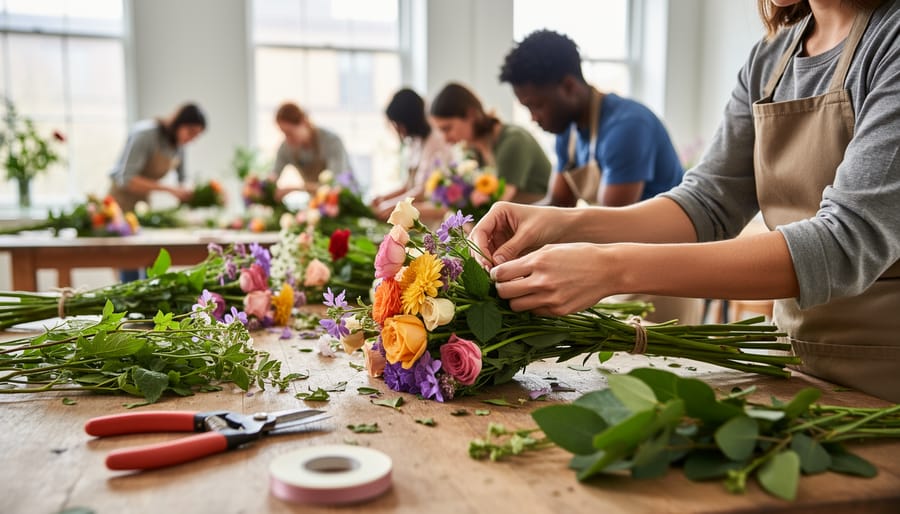
Hands-On Practice Opportunities
The best floristry courses strike a balance between watching and doing. Look for programs that dedicate at least 60-70% of class time to hands-on practice rather than demonstration alone. This ratio ensures you’re not just observing techniques but actively developing the muscle memory and confidence needed to create arrangements independently.
When evaluating courses, ask specific questions about material access. Will you work with fresh flowers during every session? How many stems will you handle per class? Quality programs provide generous quantities of flowers, foliage, and supplies so you can experiment, make mistakes, and refine your skills without anxiety about wasting materials. Some Canadian schools even allow students to take their creations home, which helps build your portfolio and gives you tangible evidence of your progress.
Consider whether practice sessions are guided or independent. Beginners benefit most from instructor supervision during hands-on work, where you receive immediate feedback and corrections. This personalized attention accelerates your learning curve significantly. Additionally, inquire about open studio time or practice sessions outside regular class hours. Access to workspace and materials for independent practice demonstrates a school’s commitment to your development and provides invaluable opportunities to master techniques at your own pace before launching your floristry journey.
Evaluating Course Quality and Credentials
What Instructor Qualifications Actually Matter
When evaluating potential instructors, look beyond impressive portfolios to find educators who can truly teach. The most qualified instructors combine three key elements: substantial hands-on experience in the floral industry, proven teaching ability, and ongoing engagement with the floristry community.
Industry experience matters because floristry involves practical skills that only come from real-world work. Your ideal instructor should have several years working in flower shops, creating arrangements for events, or running their own floral business. This background ensures they understand current design trends, seasonal flower availability in Canada, and the business realities you’ll face.
Teaching credentials don’t always mean formal education degrees. Look for instructors who demonstrate clear communication skills, patience with beginners, and structured lesson plans. Ask about their teaching experience and request testimonials from previous students. The ability to break down complex techniques into manageable steps separates good florists from good teachers.
Active community involvement signals that your instructor stays current with industry developments. Look for membership in professional organizations like provincial florist associations, participation in floral competitions, or contributions to floristry publications. Instructors who attend trade shows and continue their own education bring fresh perspectives to their teaching. They’re also more likely to connect you with mentorship opportunities and introduce you to other professionals, helping you build the network essential for success in Canadian floristry.

Certifications and Recognition in Canada
In Canada, the floristry industry offers various pathways to professional recognition, though it’s important to understand that provincial regulations differ across the country. Unlike some professions, floristry doesn’t require mandatory licensing in most provinces, which means you can legally work as a florist without formal certification. However, pursuing recognized credentials can significantly strengthen your career prospects and demonstrate your commitment to professional excellence.
The Canadian Institute of Floral Designers (CIFD) stands as the country’s premier professional organization, offering nationally recognized certifications that are highly valued by employers and clients alike. Their certification programs assess your technical skills, design theory knowledge, and creative abilities through rigorous practical examinations. Achieving CIFD certification signals to potential employers that you’ve met industry-standard benchmarks and can deliver consistent, quality work.
Provincial floristry associations also provide valuable credentials tailored to regional markets. For instance, associations in British Columbia, Alberta, and Ontario offer their own certification programs that reflect local industry needs and trends. These certifications typically involve completing approved coursework and passing practical assessments that evaluate your design competencies.
Some provinces recognize floristry as a designated trade through their apprenticeship systems. Quebec’s vocational training system, for example, offers structured floristry programs that combine classroom instruction with workplace experience. Completing an apprenticeship not only provides hands-on learning but also results in a provincially recognized credential that can open doors throughout your career.
When choosing which certifications to pursue, consider your career goals and the specific requirements in your region. Many successful florists recommend starting with foundational education, gaining practical experience, and then pursuing professional certifications once you’ve developed your skills and identified your specialty areas within the industry.
Reading Between the Lines of Course Reviews
When evaluating course reviews, look beyond five-star ratings to find substantive feedback. Authentic testimonials typically include specific details about what students learned, teaching methods used, and practical skills gained. Be cautious of reviews that sound overly promotional or lack concrete examples.
Red flags include courses with only glowing reviews posted within short timeframes, vague testimonials that could apply to any program, or reviews that don’t mention actual floristry skills developed. Legitimate feedback often acknowledges both strengths and areas for improvement.
To find genuine student perspectives, check multiple platforms beyond the school’s website. Search for reviews on Google, social media, and Canadian floristry forums. Connect with alumni through professional networks or local flower shops to ask candid questions about their learning experience.
Pay attention to feedback about instructor accessibility, hands-on practice opportunities, and post-course support. Reviews mentioning mentorship connections or successful career transitions often indicate quality programs. Remember, a mix of positive reviews with constructive criticism typically signals authentic feedback rather than curated testimonials. Trust your instincts when something feels too polished or scripted.
The Real Cost of Floristry Education

Beyond Tuition: Hidden Costs to Consider
When researching floristry courses, tuition is just the beginning of your financial commitment. Understanding the full picture helps you budget realistically and avoid unexpected surprises during your training.
Most beginner programs require you to purchase your own materials for hands-on practice. This includes fresh flowers, foliage, floral foam, wire, ribbon, and tape. Depending on the course intensity, expect to spend $200-500 throughout your program. Some schools include materials in tuition, so always clarify what’s covered before enrolling.
Essential tools represent another investment. Quality floral shears, wire cutters, knives, and a spray bottle typically cost $100-200 initially. While schools often provide tools during class, having your own set allows for practice at home and prepares you for professional work.
Travel expenses matter too, especially in Canadian cities where courses may be across town. Factor in gas, parking, or public transit costs for the duration of your program. For intensive courses meeting multiple times weekly, this adds up quickly.
Don’t overlook ongoing supplies for home practice. The more you work with flowers between classes, the faster you’ll develop your skills. Budget an additional $50-100 monthly if you plan to practice regularly. Some students find mentorship programs helpful during this learning phase, as experienced florists can guide you toward cost-effective practice strategies while building your confidence.
When Higher Prices Actually Mean Better Value
Not all expensive courses represent poor value—sometimes that higher price tag reflects genuinely superior education. The key is understanding what you’re actually paying for and whether those extras align with your learning goals.
Premium floristry courses often justify their cost through smaller class sizes, which means more personalized attention from instructors. If a course caps enrollment at eight students instead of twenty, you’ll receive hands-on corrections to your technique, immediate answers to your questions, and feedback tailored to your skill development. This individualized approach can accelerate your learning significantly compared to larger, more affordable programs where you might struggle to get instructor time.
The quality and quantity of materials also factor into pricing. Higher-priced courses typically provide premium flowers and abundant supplies for practice. Working with fresh, high-quality blooms throughout your training—rather than sharing limited materials or practicing with lower-grade flowers—better prepares you for professional work. Some programs even let you keep your arrangements or provide take-home supplies for continued practice.
Comprehensive career support represents another value-adding element. Does the course include portfolio development assistance? Job placement support? Business planning guidance for aspiring shop owners? In the Canadian floristry market, courses that offer ongoing mentorship beyond the classroom or connections to industry professionals can prove invaluable for launching your career.
Consider the instructor’s credentials too. A course taught by an award-winning florist with decades of experience naturally costs more than one led by someone with minimal professional background. Their expertise, industry connections, and real-world insights often justify the premium investment, particularly if you’re serious about establishing yourself as a professional florist.
Making the Most of Mentorship and Ongoing Support
Why Post-Course Support Matters
Your journey in floristry doesn’t end when you complete your final class assignment. The transition from beginner student to confident professional can feel daunting, which is why post-course support makes such a significant difference in your success. Quality floristry programs recognize this and build ongoing connections into their offerings.
Alumni networks create valuable peer communities where you can share experiences, troubleshoot challenges, and celebrate wins with people who understand your journey. Many Canadian florists credit their course alumni groups with providing their first client referrals or collaborative project opportunities. These connections often lead to lifelong professional relationships and friendship.
Continued instructor access gives you a safety net as you navigate real-world situations. Whether you’re unsure about pricing your first wedding consultation or need advice on sourcing specific flowers in your region, having an experienced mentor available makes problems feel manageable rather than overwhelming.
Community connections through your course can open doors to supplier relationships, studio rental opportunities, and local industry events. Schools with strong post-course support often facilitate introductions to flower markets, wholesale suppliers, and established florists who welcome newcomers. This bridge between education and professional practice helps you build confidence while expanding your network within Canada’s floristry community, transforming what could be an isolating career start into a supported, collaborative experience.
Finding Courses with Built-In Mentorship
When evaluating floristry courses, look for programs that explicitly mention one-on-one guidance, instructor feedback sessions, or ongoing support beyond classroom hours. Quality courses often highlight their mentorship components in course descriptions, mentioning dedicated office hours, portfolio review sessions, or alumni networks that connect beginners with experienced florists.
In Canada, some institutions pair students with established florists for practical learning experiences. Ask potential schools about their instructor-to-student ratios and whether they offer personalized feedback on your work. Programs that include apprenticeship arrangements or practicum placements typically provide the most robust mentorship experiences, allowing you to learn directly from working professionals in real-world settings.
However, formal education doesn’t have to be your only source of guidance. Tadine’s platform offers mentorship opportunities that complement structured courses beautifully. Whether you’re enrolled in a certificate program or learning independently, connecting with an experienced mentor provides personalized advice tailored to your specific goals and challenges. This dual approach combines the foundational knowledge from coursework with the practical wisdom and industry insights that only a mentor can provide. Many successful florists credit their growth to this combination of formal training and mentorship support, as it addresses both technical skills and the nuanced aspects of building a floristry career.
Red Flags to Watch Out For
Promises That Sound Too Good to Be True
Be cautious of programs making extraordinary promises about your floristry journey. Quality education takes time and dedication, so legitimate courses won’t guarantee you’ll become a master florist in just days or weeks. The reality is that developing your design skills, understanding flower care, and building business acumen requires consistent practice and ongoing learning.
Watch for courses claiming you’ll earn specific dollar amounts immediately after completion. While floristry can be financially rewarding, your income depends on numerous factors including your market, effort, business model, and local demand. Reputable programs in Canada focus on teaching you solid fundamentals rather than promising overnight financial success.
Similarly, avoid courses suggesting that floristry requires no artistic ability or that anyone can instantly create wedding-worthy arrangements without practice. While floristry is absolutely learnable for beginners, it does require developing your creative eye and technical skills over time. Programs offering unrealistic timelines or guaranteed outcomes often lack the depth needed for genuine skill development. Instead, look for courses that emphasize progressive learning, provide mentorship opportunities, and set realistic expectations about your growth trajectory as you build your floristry career.
Pressure Tactics and Enrollment Urgency
Reputable floristry schools give you space to make informed decisions about your education. They’ll provide detailed course information, answer your questions thoroughly, and allow you time to compare options before enrolling. You should never feel rushed into making a financial commitment, especially for programs requiring significant investment.
Watch for aggressive sales tactics like “limited-time offers” that expire within hours, claims that only a few spots remain (when courses run regularly), or pressure to pay deposits immediately during initial consultations. Quality Canadian floristry programs understand that choosing the right educational path requires careful consideration of your schedule, budget, and career goals.
Legitimate schools will encourage you to speak with current students or graduates, attend open houses, and review course materials before committing. They’ll clearly explain refund policies and provide written agreements detailing exactly what your tuition covers. If someone discourages you from researching other options or makes you feel guilty for taking time to decide, that’s a significant warning sign.
Trust your instincts. Professional educators want students who are genuinely excited and prepared for their programs, not individuals coerced into quick decisions they might regret.
Your Next Steps: From Research to Registration

Creating Your Course Comparison Checklist
Now that you understand what makes a quality floristry course, it’s time to create your personal evaluation tool. Start by making a simple spreadsheet or document with columns for each course you’re considering and rows for the key criteria that matter most to you.
Include essential factors like total cost (tuition plus materials and tools), course duration, schedule flexibility, and location or online accessibility. Add rows for curriculum comprehensiveness, including whether design principles, business basics, and hands-on practice are covered. Note the instructor’s qualifications and industry experience, class size, and the student-to-teacher ratio you’ve been quoted.
Don’t forget to track practical elements like whether fresh flowers are included, what happens to your arrangements after class, and if the course offers any job placement support or connections to the Canadian floristry community. Leave space to note mentorship opportunities, which can significantly impact your learning journey and career development.
As you research each program, fill in this checklist honestly. Some information might require a phone call or email to the school, but taking this extra step shows your commitment and often reveals how responsive and supportive the institution will be throughout your learning experience. Once completed, your checklist will provide a clear, side-by-side comparison that removes emotion from the decision and helps you choose the course that truly aligns with your goals and circumstances.
Using Tadine’s Resources to Find the Right Fit
Making an informed decision about your floristry education becomes much easier when you have the right tools at your fingertips. Tadine offers several valuable resources designed specifically to support aspiring florists across Canada as they navigate their educational journey.
Start by exploring Tadine’s comprehensive floristry school directory, which connects you with accredited programs and courses throughout the country. This searchable database allows you to filter schools by location, program type, and specialization, making it simple to compare your options side-by-side. You’ll find detailed information about course curricula, instructor credentials, and student reviews all in one convenient location.
Beyond the directory, Tadine provides educational modules that introduce fundamental floristry concepts before you commit to a full program. These free resources help you determine whether floristry truly aligns with your interests and abilities, while also familiarizing you with industry terminology and basic techniques.
Perhaps most valuable is Tadine’s mentorship matching service, which pairs beginners with experienced Canadian florists. These mentors can offer firsthand insights about different educational paths, share their own learning experiences, and provide honest feedback about which courses might suit your specific goals and circumstances. This personalized guidance proves invaluable when weighing factors like course intensity, teaching styles, and career outcomes. By combining these resources, you’ll build confidence in your decision and start your floristry journey with clarity and purpose.
Choosing the right floristry course is more than just signing up for classes—it’s an investment in your creative future and professional development. Whether you’re dreaming of opening your own floral studio, adding new skills to your existing business, or simply exploring a passion that might become your career, the education you choose will shape your journey in meaningful ways.
Remember that there’s no one-size-fits-all approach to floristry education. The perfect course for you depends on your unique goals, learning preferences, budget, and schedule. Take time to evaluate your options carefully, ask questions, and trust your instincts when something feels right. Don’t hesitate to reach out to schools directly, connect with alumni, or seek advice from experienced florists who can share their perspectives on different educational paths.
The Canadian floristry community is welcoming and supportive, with numerous opportunities for mentorship and growth. By choosing a course that aligns with your aspirations and learning style, you’re setting yourself up for success in this rewarding industry.
Your floristry dreams are within reach. Every accomplished florist started exactly where you are now—at the beginning, filled with questions and possibilities. Take that first step today. Research your options, trust the process, and embrace the beautiful journey ahead.