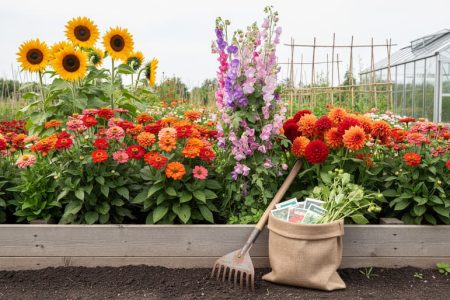
Colorful cut-flower plants in a Canadian garden bed, including sunflowers, zinnias, dahlias, and sweet peas, with gardening tools and a seed basket nearby.

10 Budget-Friendly Plants for Flower Gardens That Deliver Professional Results

Growing cut flowers for your garden or small floral business requires just ten proven, budget-friendly plants that cost between $2 and $15 to start, deliver multiple flushes of blooms per season, and propagate easily to expand your stock without additional investment. These workhorses of the cutting garden, including zinnias, sunflowers, dahlias, and sweet peas, thrive in Canadian growing zones and offer the combination of low entry cost, high stem count, and market appeal that makes them profitable for aspiring florists and satisfying for home gardeners.
The economics of flower growing change dramatically when you choose varieties …
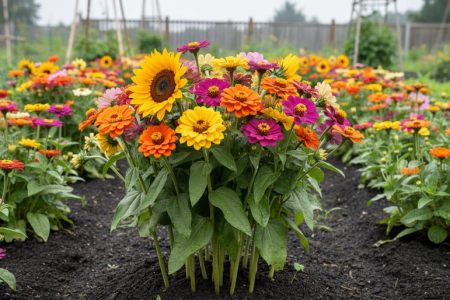
Close-up view of sunflowers, zinnias, and cosmos growing in a Canadian cutting garden bed with long stems and vibrant summer colors.

8 Quick Growing Annual Flowers for a Fast, Beautiful Garden in 2026

The fastest annual flowers go from seed to bloom in 6 to 10 weeks, transforming empty garden beds or cutting patches into productive color by midsummer. For Canadian florists and flower growers working within a short growing season, quick-blooming annuals like sunflowers, zinnias, and cosmos offer reliable harvests without the wait, making them essential for both business bouquets and skill-building practice. Whether you’re planning your first cutting garden to supplement a Canadian florist salary or filling gaps in an established …

Aspiring florist at a studio workbench comparing course options on a laptop while assembling a bouquet; calculator, shears, and premium roses, ranunculus, and eucalyptus on the table; soft natural light with blurred shelves of vases and flower buckets in the background.

How to Pick the Perfect Floristry Course (Without Wasting Your Money)

Evaluate course credentials by verifying instructor qualifications through provincial business registries and requesting student portfolios from recent graduates. Contact three to five past students directly—reputable schools willingly provide references—and ask specific questions about hands-on hours, flower variety exposure, and post-graduation support. This vetting process separates established programs from rushed weekend workshops that leave you unprepared for professional work.
Calculate the true cost per contact hour, not just total tuition. A $2,500 course offering 40 hours of direct instruction ($62.50 per hour) …