
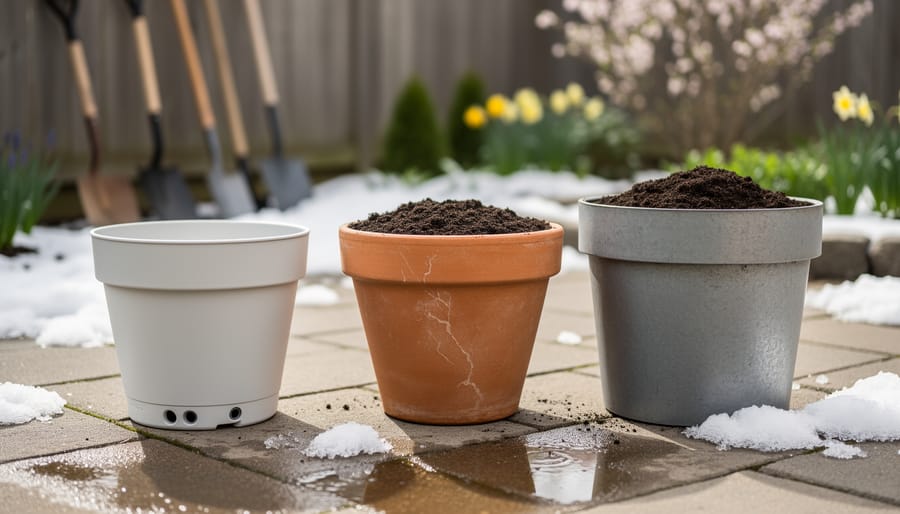
The best cheap garden flower pots are the ones that match your plants and your climate, not simply the lowest price tag. For most Canadian gardeners, that means a lightweight plastic or polymer pot with drainage holes for annuals, terracotta for herbs and drought-tolerant plants, and a sturdier option like concrete or steel when a pot has to stay outside through a hard winter.
Price is only part of the story. A pot that cracks after one freeze-thaw cycle or traps water around the roots costs you more than a slightly pricier one that lasts for seasons. Retailers across the country, including Home Depot Canada, Canadian Tire, and JYSK Canada, carry everything from terracotta and ceramic to polyrattan and modern polymer planters. Amazon.ca adds thousands more listings, which makes choosing harder, not easier.
This guide helps you sort through that choice with confidence. You’ll learn which factors matter most, how the main pot materials compare, and which mistakes quietly drain a budget. If you’re an aspiring florist, these are the same economical growing habits that keep a small cutting garden productive and affordable, and the kind of practical know-how we love to pass along through mentorship here at Tadine.
What Makes a Flower Pot Good Value (Not Just Cheap)
The sticker price is only the first number in the equation. A pot that costs a few dollars less but cracks after one frost, or traps water around the roots, ends up costing more in replacements and lost plants. Real value is a mix of three things: how many seasons the pot lasts, how well it supports healthy plants, and how flexibly you can use it from one year to the next.
Think of it as cost per season of use. A sturdy planter that serves you for several summers usually beats a flimsy one you replace every spring. Plant health counts just as much. Drainage holes, a size that suits the roots, and a material that handles your weather all protect the flowers you’ve put time and money into. Then there’s flexibility. A simple pot that can start seedlings in April, hold patio annuals in June, and be cleaned and stored for next year works harder than one built for a single purpose.
The encouraging part is that none of this requires a big budget. Plenty of affordable options exist, from basic plastic to terracotta, and a little attention to the basics will take you a long way. Every grower starts somewhere, whether you’re a weekend hobbyist with a few balcony pots or an aspiring florist practising with your first cutting flowers. Smart, modest choices now build the habits and confidence you’ll use for years.
Key Buying Factors Before You Spend a Dollar
Drainage, Size, and Depth: Getting the Basics Right
Drainage comes first, because roots sitting in soggy soil struggle for oxygen and rot quickly. Drainage holes improve root air by letting extra water escape, which is why a pot without them is rarely a bargain, however low the price. If a pot you love has no holes, you can often drill your own in plastic or terracotta.
Next, match the pot to the plant. Shallow annuals like petunias and marigolds do well in smaller containers, while perennials need more room to settle in and spread. Cutting-garden flowers such as zinnias and dahlias grow tall and thirsty, so give them a wider, deeper pot that supports strong roots and sturdy stems. As a simple rule, choose a container a little bigger than the root ball, not one that looks cavernous. Too much extra soil stays wet longer and invites trouble.
Finally, check the packaging for saucers. Many cheap multi-packs leave them out, and a saucer protects patios, balconies, and floors from drips. Look at the product listing or label carefully and note whether saucers are included. If they’re not, a few inexpensive saucers can still keep the total cost modest, and you’ll know exactly what you’re paying for.
Weather Resistance and Self-Watering Features
Canadian weather is tough on budget pots, so it helps to know what each season can do to them. Water that soaks into a pot and then freezes expands, and that repeated freeze-thaw cycle is a common reason porous containers crack. Frost cracks terracotta pots in particular, so if you love the look, plan to empty and store them before a hard freeze rather than leaving them out all winter.
Sun and wind matter too. Lightweight plastic can fade or turn brittle after seasons in strong sun, and a tall, light planter loaded with tall blooms can tip in a gust. A little soil weight at the base, or a sheltered spot, goes a long way. Retailers such as JYSK Canada describe weather-resistant outdoor planters in steel, polyrattan, and modern polymer, which is a helpful search term when you want something built for the outdoors.
Self-watering sets are worth considering if your schedule is busy or you’re away on weekends. Self-watering containers manage moisture through a built-in reservoir, which can keep thirsty annuals steadier between waterings. If you enjoy a daily check-in with your plants, or you’re growing drought-tolerant varieties, a standard pot with good drainage is usually all you need.
Types of Budget Pots Compared: Plastic, Terracotta, and More
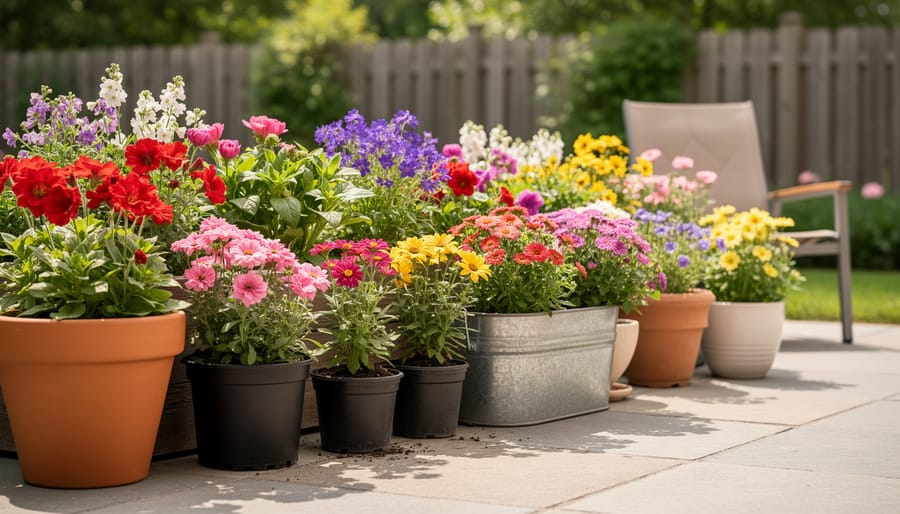
Walk down the planter aisle at a Canadian retailer and you’ll notice the material matters as much as the shape. Home Depot Canada lists terracotta, rubber, concrete, and ceramic pots alongside outdoor planter styles, while JYSK Canada highlights steel, polyrattan, and modern polymer designs. Each one behaves differently once it’s filled with soil and left outside, so it helps to know what you’re choosing between.
| Pot type | Typical strengths | Trade-offs to consider | Best suited for |
|---|---|---|---|
| Basic plastic or clear nursery pots | Lightweight, easy to stack and reuse, low cost | Can fade or turn brittle in strong sun; plain look | Starting seedlings and propagating cuttings |
| Terracotta | Breathable clay, classic look, forgiving for overwatering | Dries out quickly; heavier; can crack in freeze-thaw | Dry-loving plants and sheltered patios |
| Rubber | Flexible, light, and tough | Less decorative; may heat up in full sun | Everyday patio displays |
| Concrete | Very sturdy and stable in wind | Heavy to move; can be pricey to ship or carry | Permanent spots and tall plants |
| Ceramic | Attractive glazes, good moisture retention | Breakable and heavy; may need winter storage | Front steps and decorative groupings |
| Steel, polyrattan, modern polymer | Weather-resistant designs, often made as planters or balcony boxes | Look varies by style; check drainage details | Balcony rails and small spaces |
Plastic and clear nursery pots are the workhorses of a budget garden. They’re light, they stack neatly, and you can find multi-packs in several sizes, which makes them ideal for starting seedlings or rooting cuttings. If you’re sowing quick growing annuals a tray of small plastic pots is an easy, low-risk way to begin. The trade-off is looks: they’re practical rather than pretty, and some can wear down after seasons of sun.
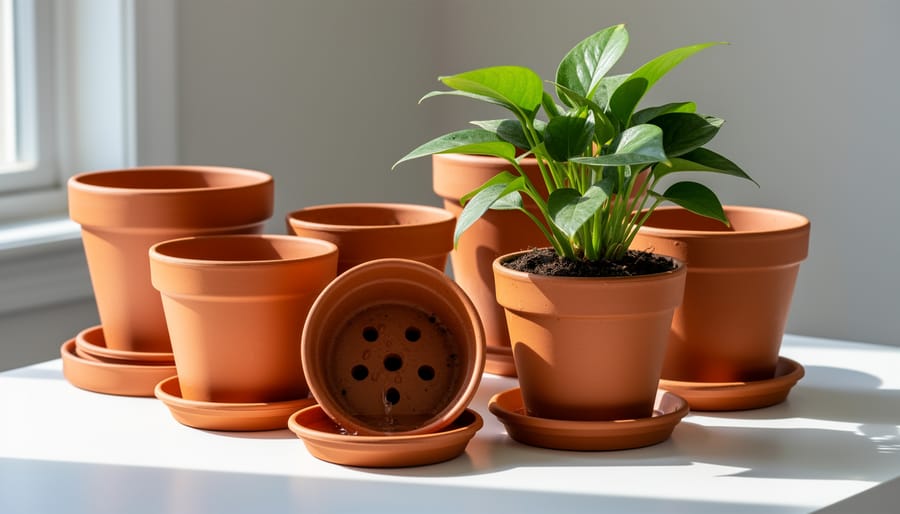
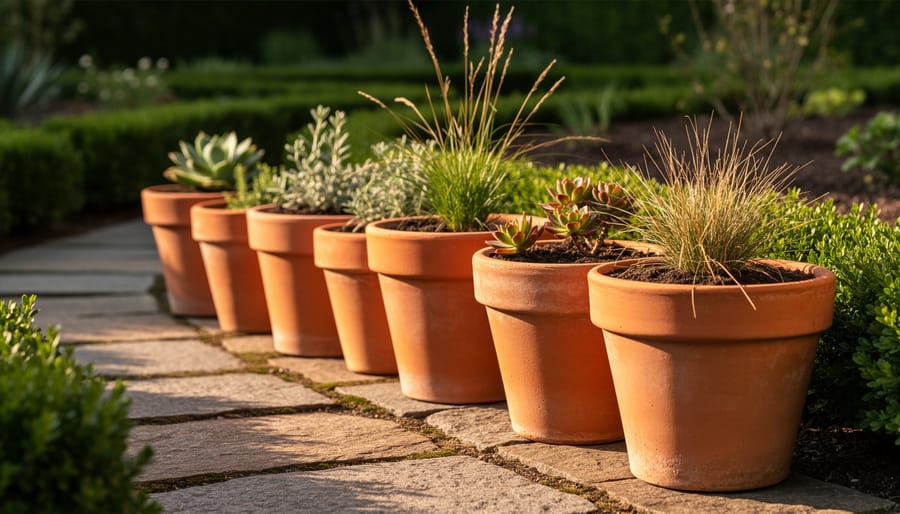
Terracotta earns its popularity because the clay breathes. Moisture moves through the walls, so soil tends to dry faster and roots are less likely to sit wet. That’s a real plus for succulents and herbs, but it means thirstier flowers may need more frequent watering. Terracotta can also crack if water freezes inside it, so many Canadian gardeners bring pots in or empty them for winter.
Rubber and polymer options sit in a handy middle ground. They resist knocks, hold up outdoors, and weigh far less than stone or clay. Concrete and ceramic go the other direction: they look substantial and stay put in a breeze, yet they’re heavy and harder to rearrange. Steel and polyrattan planters, like the weather-resistant styles JYSK Canada carries, suit railings and tight balconies where space and weight both count.
When you compare, think about where the pot will live and how often you’ll move it. A lightweight pot you can shuffle around is often better value than a handsome one you never want to lift.
Where to Find Affordable Garden Pots in Canada
Once you know what you need, the next question is where to look. Canadian growers have a handful of big retailers worth browsing, and each leans a little differently.
Home Depot Canada lists planters and plant pots in terracotta, rubber, concrete, and ceramic, along with outdoor planter styles. That range makes it handy for comparing materials side by side before you commit to one. Canadian Tire has an outdoor planters category that includes large, tall, and box planters, which suits anyone planning a bigger patio display or a row of matching containers.
JYSK Canada sells weather-resistant outdoor planters, garden pots, and balcony boxes. Its outdoor planters come in steel, polyrattan, and modern polymer designs, so it’s a useful stop if you’re working with a small balcony or a railing and want something built to handle the elements.
Amazon.ca is the widest net. A search for “cheap garden pots” turns up more than 5,000 results, and searches for “garden pots and planters clearance” and “outdoor planters clearance” each show more than 20,000. Among them you’ll find practical bulk options, such as a 36-pack of 4, 5, 6, and 7 inch clear nursery pots. That’s the sort of multi-pack that works nicely for seedlings and cuttings, and it pairs well with starting a handful of budget-friendly plants from seed.
With so many results, sorting by price is a good starting point, but don’t stop there. Compare pack sizes so you’re judging the true cost per pot, and read the measurements carefully, since a pot that looks roomy online can turn out smaller than you expected. Stock and pricing vary from store to store and change often, so treat each retailer as a place to browse rather than a guarantee. A few minutes of comparing across two or three of them usually uncovers the best deal for your space and your plants.
Recommendations: Matching the Right Budget Pot to Your Garden Goal
The smartest budget pot is the one that matches what you’re actually growing, so start with your goal and work backwards. Here’s how I’d pair the common use cases with pot types:
- Starting seedlings and propagating cuttings: a multi-pack of plastic or clear nursery pots in mixed sizes.
- Patio colour: a larger multi-pot set with drainage holes and matching saucers for annuals.
- Balcony railings and tight spaces: weather-resistant planters or balcony boxes sized to fit your rail.
- Cut-flower containers: deeper, roomier pots that let roots stretch and support taller stems.
- Herbs or foliage for arrangements: mid-sized pots with good drainage, with terracotta suiting dry-loving varieties.
Multi-packs are a lovely place to begin because you can move seedlings up through the sizes as they grow, and the clear versions let you check root development without disturbing the plant. For patio annuals, look for a set that includes saucers so you protect your deck or balcony floor. Terracotta breathes well, which makes it a natural fit for plants that prefer to dry out between waterings, though it will need watering more often in summer heat.
If you rent or garden on a balcony, check the dimensions of your railing before ordering a balcony box, and look for outdoor-rated materials that can handle sun, wind, and rain. For cutting flowers like zinnias or snapdragons, depth matters more than flashiness. A deeper container gives roots room and tends to reward you with sturdier stems.
If you’re an aspiring florist, a small container garden is a wonderful training ground. You can practise growing, harvesting, and conditioning your own stems, which means cutting at the right moment, stripping lower foliage, and giving them a good drink, all without the pressure of a full cutting garden. Pay attention to which flowers last in a vase and which ones sulk. If you’re not sure what’s worth growing, Tadine’s mentorship connections can point you toward varieties that florists actually reach for, so your limited pot space goes to the blooms that earn their keep.
Stretching Your Budget Further: Reusing and Upcycling Containers
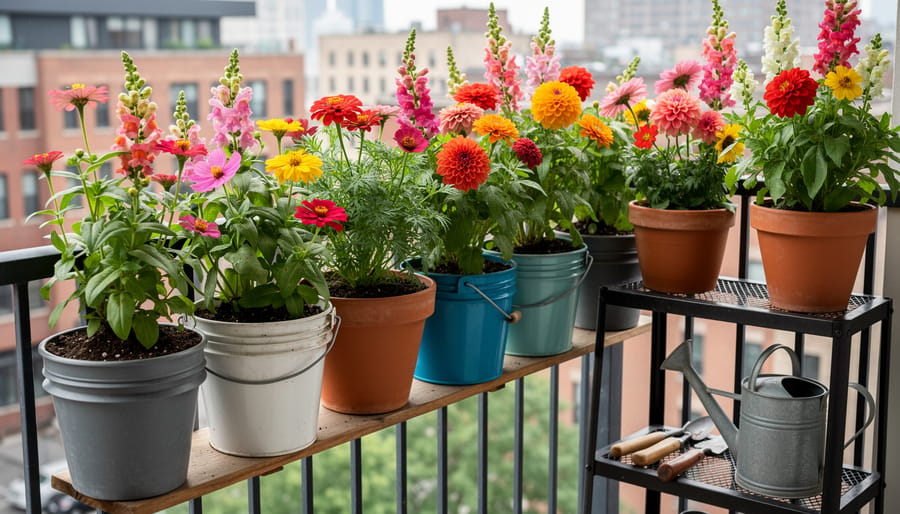
You don’t always have to buy new to grow well. Some of the best containers for a budget garden are ones you already have or can get nearly free.
Start with nursery pots. When you pick up plants at a garden centre, keep the black plastic pots they come in. They already have drainage holes, they’re sized for healthy roots, and they stack neatly in a shed. Scrub them with warm, soapy water at the end of the season, rinse well, and let them dry before storing so they’re ready for spring cuttings and seedlings. Cleaning between seasons also helps prevent leftover soil pests and disease from carrying over.
Sturdy household containers can earn a second life too. Think buckets, tubs, or old crates. The one rule is drainage: drill several holes in the base before you plant, because standing water is the quickest way to lose a plant. Choose containers that feel solid and avoid anything that has held harsh chemicals.
Buying in bulk helps as well. Multi-packs of plain plastic or clear nursery pots, which are easy to find through online retailers like Amazon.ca, can be shared across seedling trays, propagation projects, and patio displays, so one purchase covers several jobs.
Once your containers are sorted, small finishing touches add up. A bit of economical garden edging can tidy the space around your pots and beds without a big spend, helping your whole garden look intentional on a modest budget.
Common Mistakes to Avoid When Buying Cheap Pots
Even experienced growers slip up when pots are inexpensive and tempting. The good news is that most budget-pot mistakes are easy to spot once you know what to look for, and nearly all of them can be fixed before you’ve spent much at all.
- No drainage holes: choose a pot that has them, or drill your own into sturdy plastic or terracotta using the right bit.
- A pot that’s too small: size up so mature roots have room to spread, especially for cutting flowers.
- The wrong material for the spot: match the pot to its sun, wind, and frost exposure rather than grabbing whatever’s cheapest.
- Unchecked pack contents: confirm whether saucers are included and how many pots are actually in the set.
- Price-only comparisons: compare measurements and pack sizes, not just the number on the tag.
That last point deserves a second look. A low price can hide a pot that’s shallower or narrower than it appears in the photo, so always read the listed diameter and depth. This matters most when you’re browsing huge catalogues, such as the thousands of results on Amazon.ca, where similar-looking pots can differ a lot in size.
Weather is the other quiet trap. A pot that looks fine in a sheltered corner may struggle on an open balcony or a frosty patio. Think about where it will actually sit before you buy.
Don’t be discouraged if you’ve made one of these mistakes already. Every grower has, and a quick fix usually saves the pot and the plant.
Frequently Asked Questions About Cheap Garden Flower Pots
Do cheap pots need drainage holes?
Yes, drainage holes are the one feature worth insisting on, because they let excess water escape and protect roots from rot. If a bargain pot has none, you can often drill holes yourself, or use it as a decorative outer sleeve for a nursery pot.
Are plastic pots as good as terracotta?
They suit different jobs. Plastic is light and holds moisture longer, while terracotta breathes and works well for plants that prefer drier soil, so the better choice depends on what you’re growing.
Can I make flower pots from household items?
Absolutely. Sturdy containers work well once you add drainage holes and clean them thoroughly, which is a lovely way to stretch your budget.
Where can I buy affordable planters in Canada?
Home Depot Canada, Canadian Tire, JYSK Canada, and Amazon.ca all carry a wide range of planters and pots. Stock and pricing vary, so sort by price and check measurements before you buy.
Still have a question that isn’t covered here? Growing on a budget is a wonderful way to build confidence, and if you’re thinking about turning that passion into a career, our guide to floristry course choice can help you invest your time and money wisely. Every florist starts with a few humble pots and plenty of curiosity, so start small, experiment, and enjoy the learning.
Smart, budget-friendly pot choices are the quiet backbone of Economical Flower Gardening. When you pick containers with proper drainage, a size that suits your plants, and a material that handles your climate, even the most affordable pots can support healthy, abundant blooms.
So start small. Grab a few pots, plant a handful of flowers you love, and watch what thrives in your space. Notice which materials hold up through your weather and which sizes give your roots room to grow. Every season of testing makes your next purchase smarter.
If growing has you dreaming bigger, that’s wonderful. Many florists begin exactly this way, with a small container garden and a lot of curiosity. When you’re ready to turn that passion into a career, Tadine’s educational modules and mentorship opportunities can guide you, and a thoughtful flower shop business plan is a great next step toward making it real.


